AI tools such as ChatGPT can support us in our daily lives and work. However, what happens when we begin relying on AI for personal decisions rather than using it as a tool?
Rel-AI-tionship explores this question through the story of Steve, a man who gradually becomes dependent on AI for everyday choices. Using humor and satire, the film encourages viewers to reflect on the boundary between AI assistance and AI dependency.
Team members: Tarek Alfutih, Marie Tornau, Rasti Tengman Mhealden,
Tabassum Alam, Kimia Mohammadi
My role: I served as Art Director, Lead Illustrator, Video Editor, and Project Manager. I coordinated the production process, created the visual style, produced most of the illustrations, and assembled the final animation in After Effects.
Ideation Process
We started by brainstorming individually: each of us had two minutes to create a short story idea on paper. Then, we rotated our papers and continued each other’s stories. By the end, we had five different concepts, most of which explored AI and its role in daily life. We discussed all the ideas together and used dot voting to select the final story.
The story
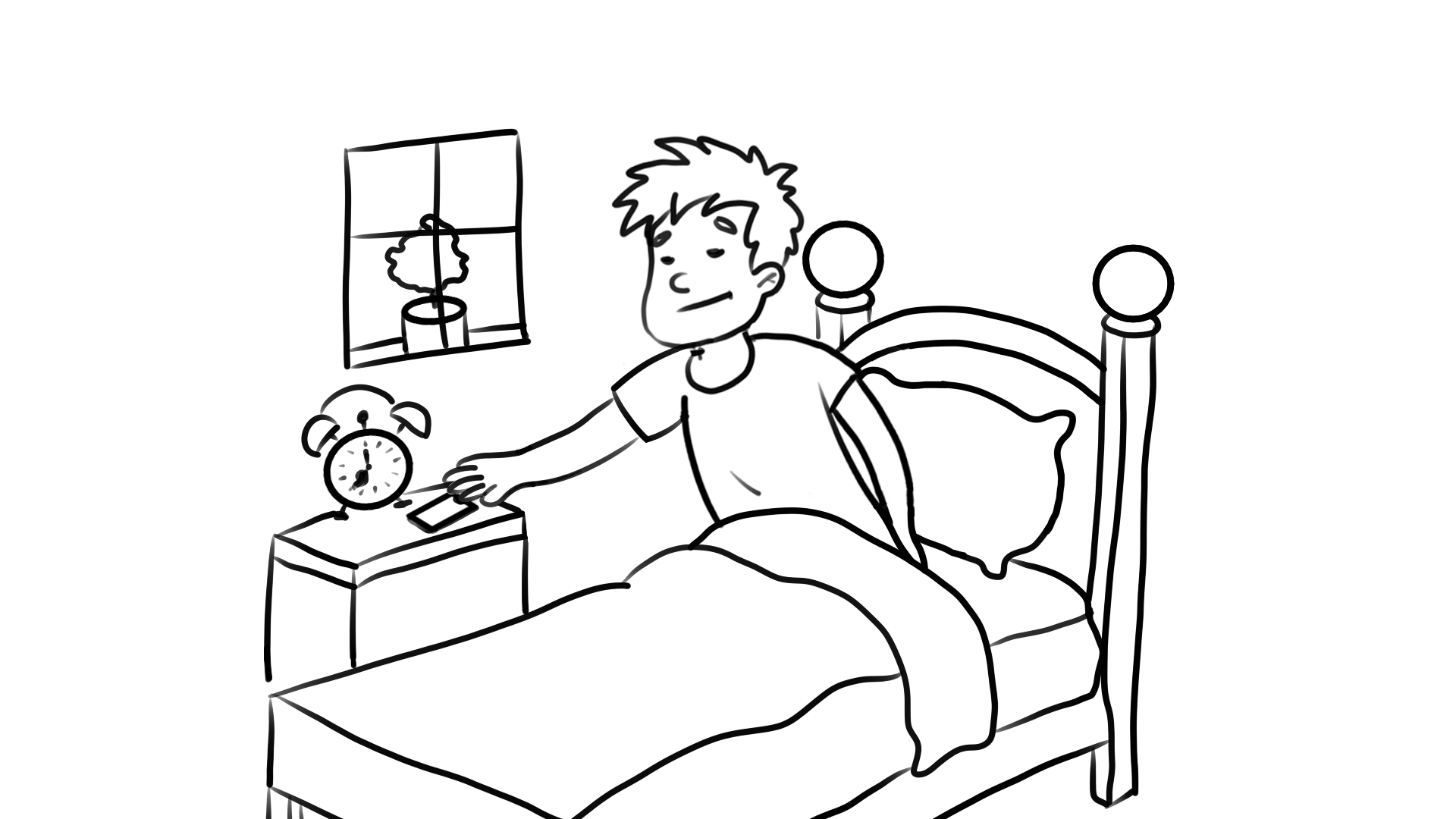
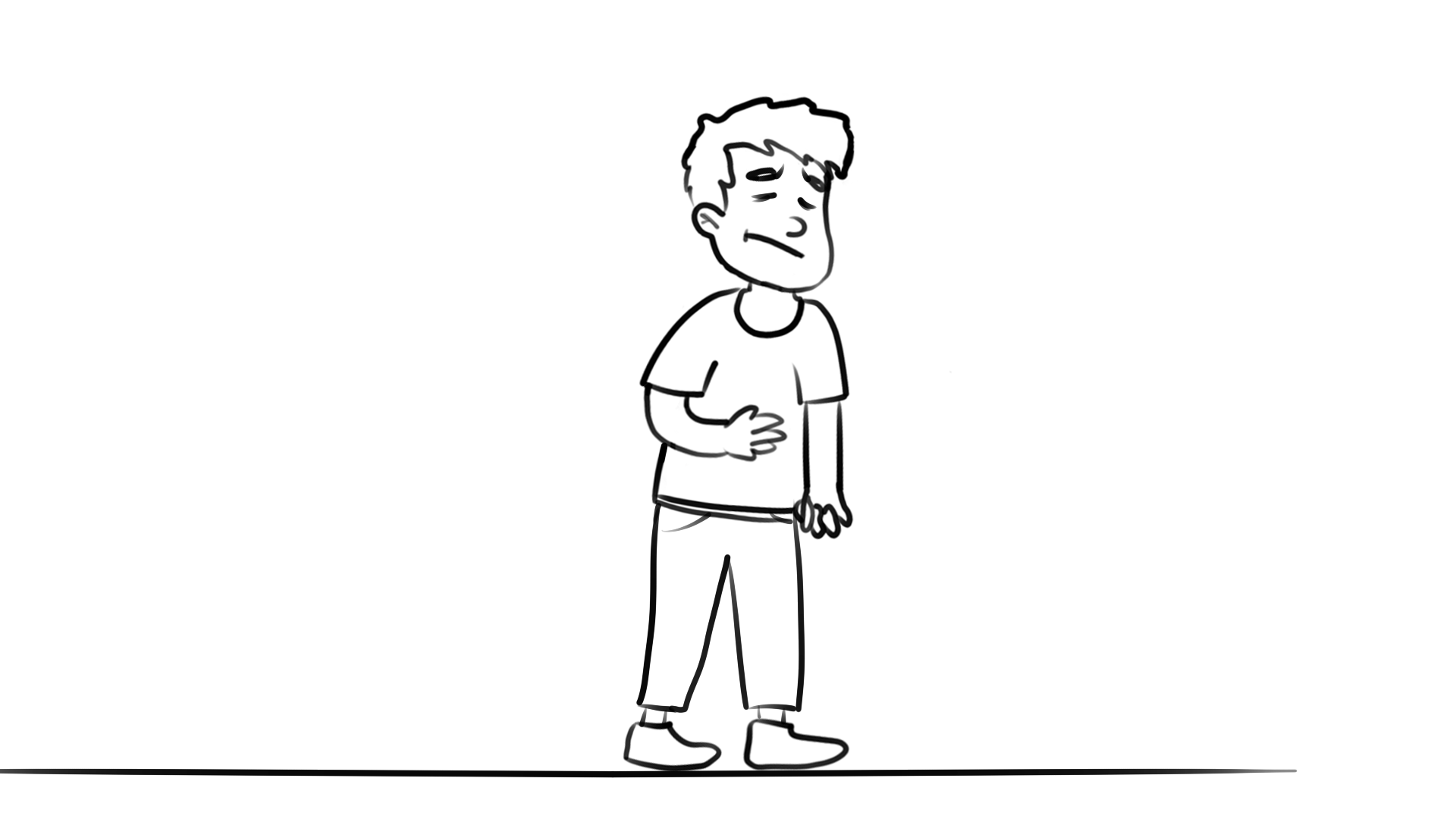
It follows a person who starts his day fully dependent on AI. After waking up, he immediately asks his AI app what to eat. The AI suggests something he doesn’t have at home, so he settles for a poor breakfast that leaves him tired for the rest of the day.
Later, Steve chats with his girlfriend on WhatsApp. Instead of responding himself, he relies on AI to answer all of her questions.
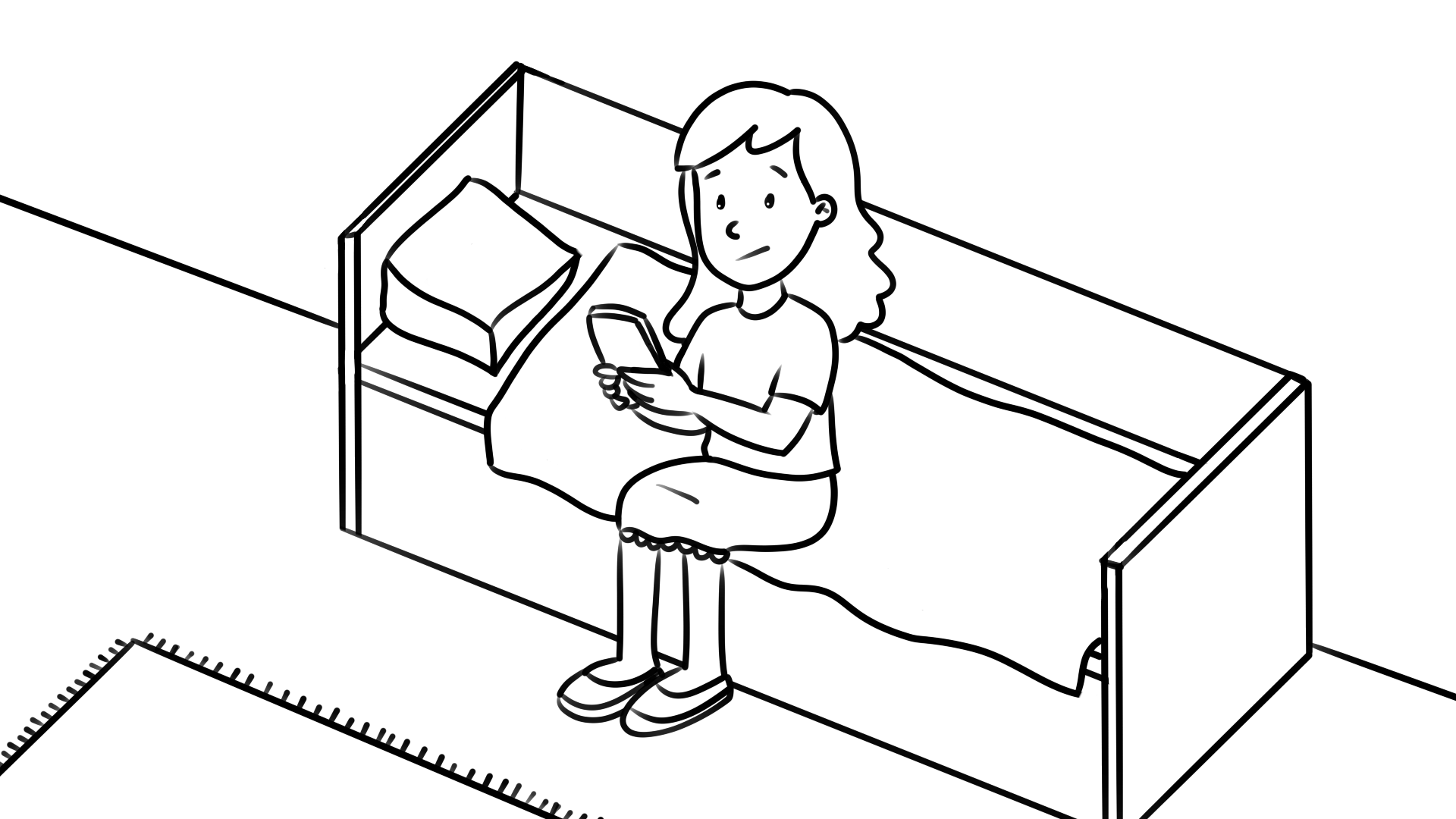
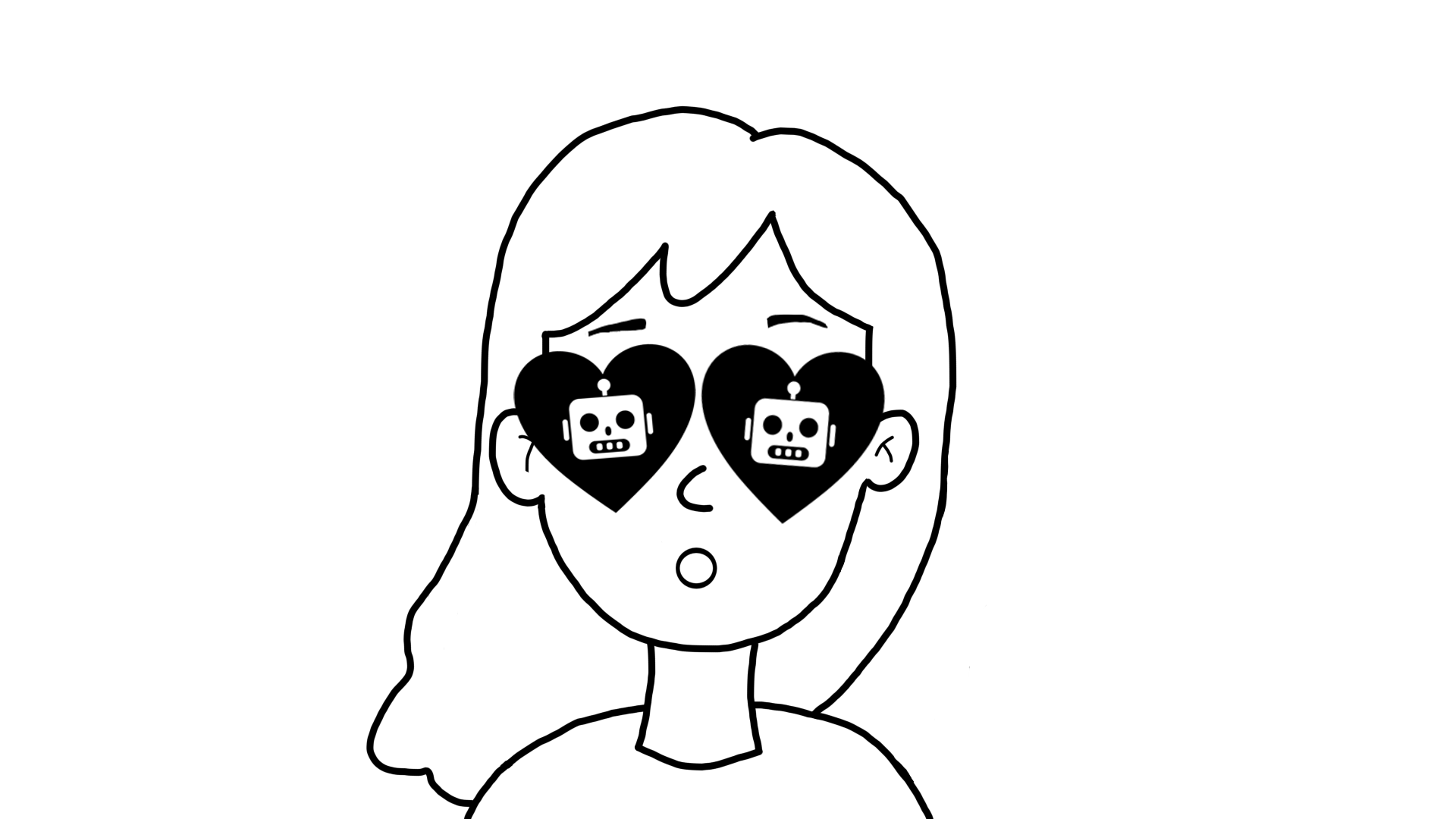
Upon receiving the AI's final, robotic response, the girlfriend realizes the truth. Instead of anger, she feels infatuation, symbolized by a close-up showing hearts with robot logos over her eyes. She goes to the main character's home, takes his phone, kisses the screen, and leaves, having chosen the AI over him. The story concludes with a black screen, emphasizing the main character's total bewilderment.
Storyboard and Planning
We used a storyboard to plan the story structure, timing, and flow of the animation. Each scene was placed on a timeline to organize the narrative, assign tasks, and prepare voice and sound elements before production.

The Process
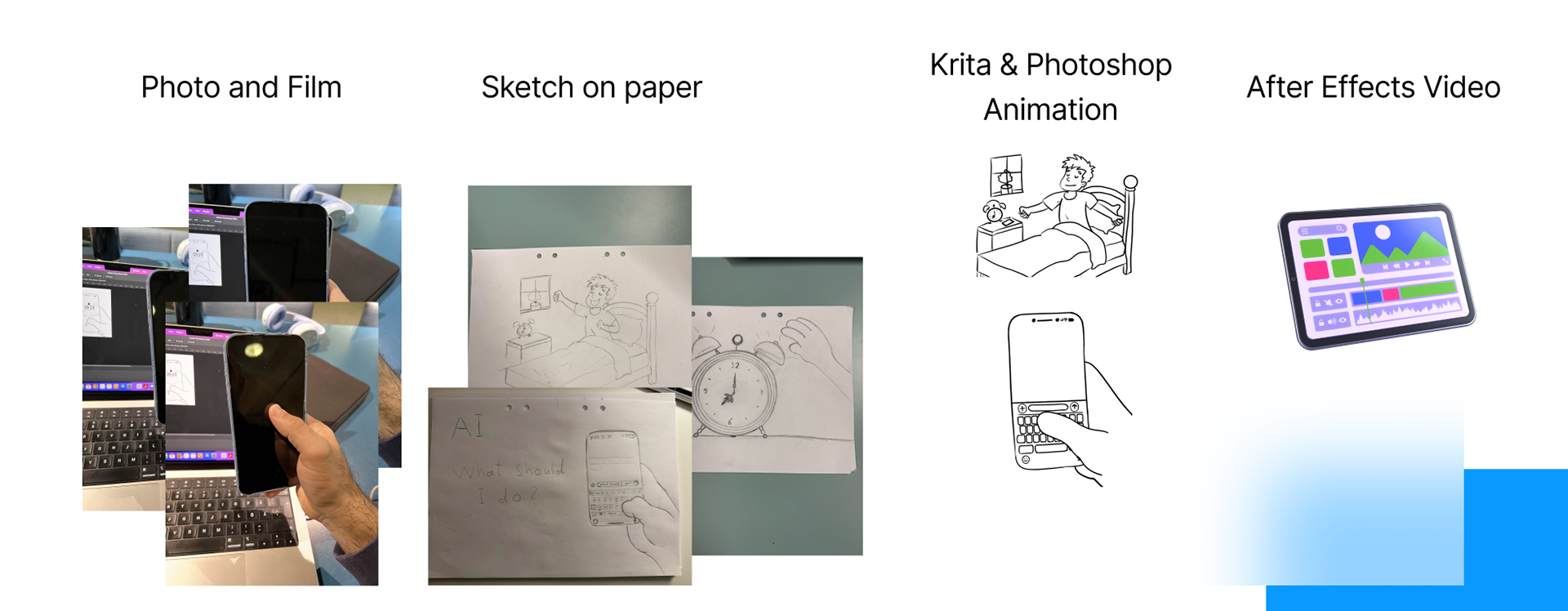
We started by planning the video together. I made the sketches for the whole team and divided the work between us. I drew the sketches by hand using paper and pen, and sometimes used photos as references.
After that, we created the drawings and animations using Krita and Photoshop. In the final step, I collected all the work from the team and edited the final video in After Effects.
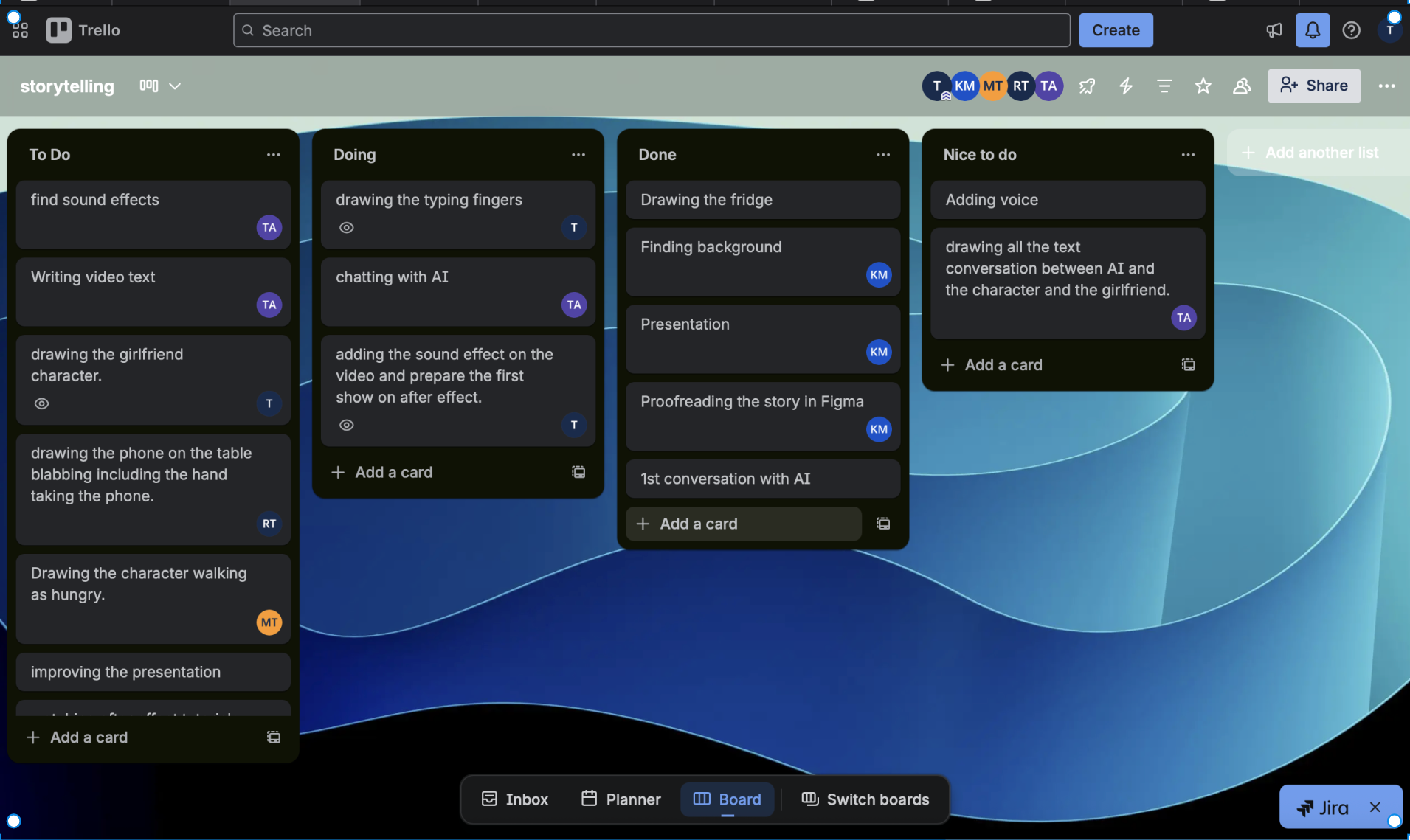
Organizing Our Workflow with Trello
We used Trello to organize our project tasks. It helped us divide the work, track progress, and monitor what was to do, in progress, and done.
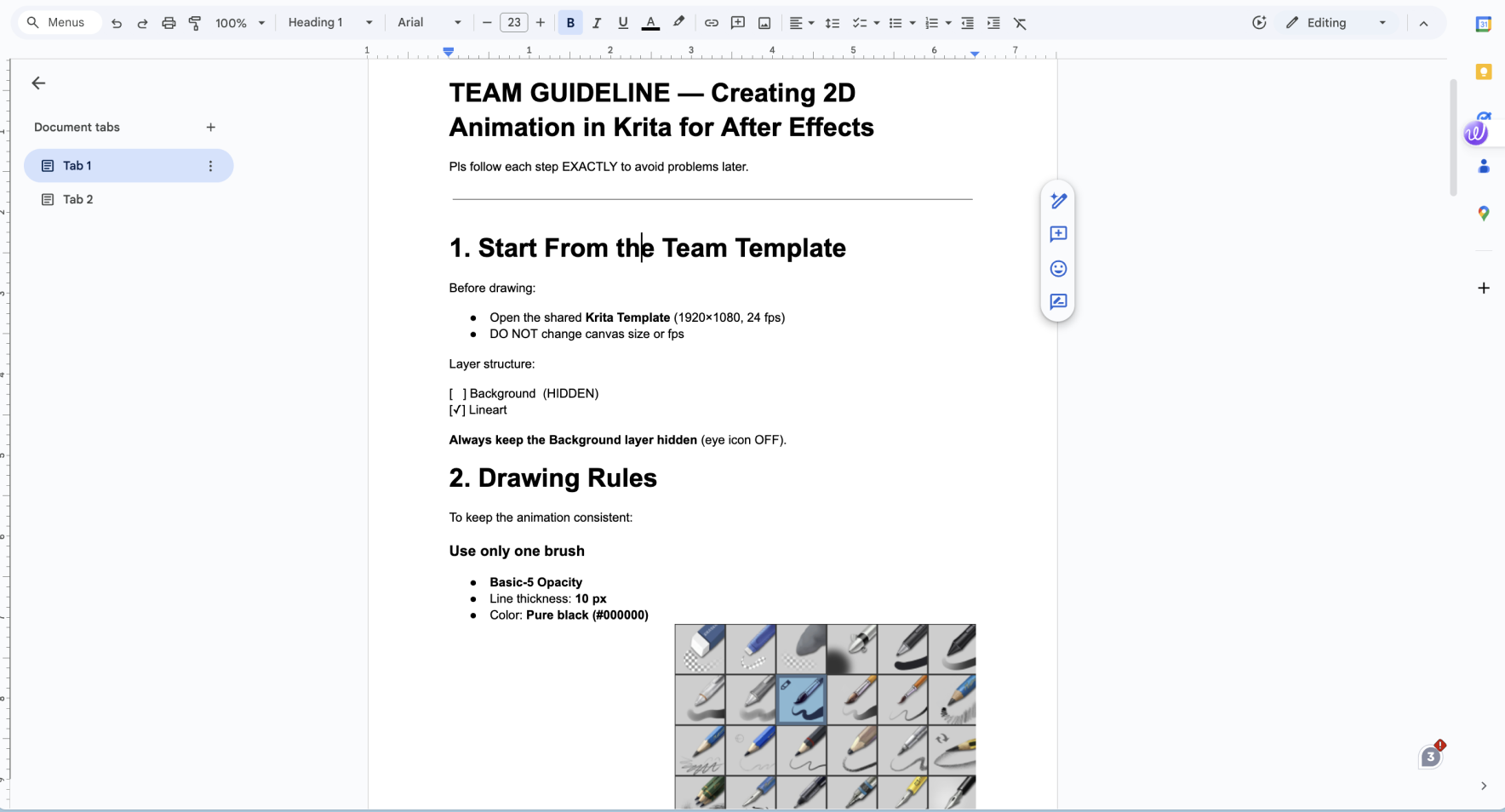
Team Animation Guidelines
I created a guideline for the team to ensure consistent settings across all animations in the video. It documented the key rules, style choices, and workflow steps for working in Krita.