TrailMate
A connected bracelet system designed to make solo hiking safer.
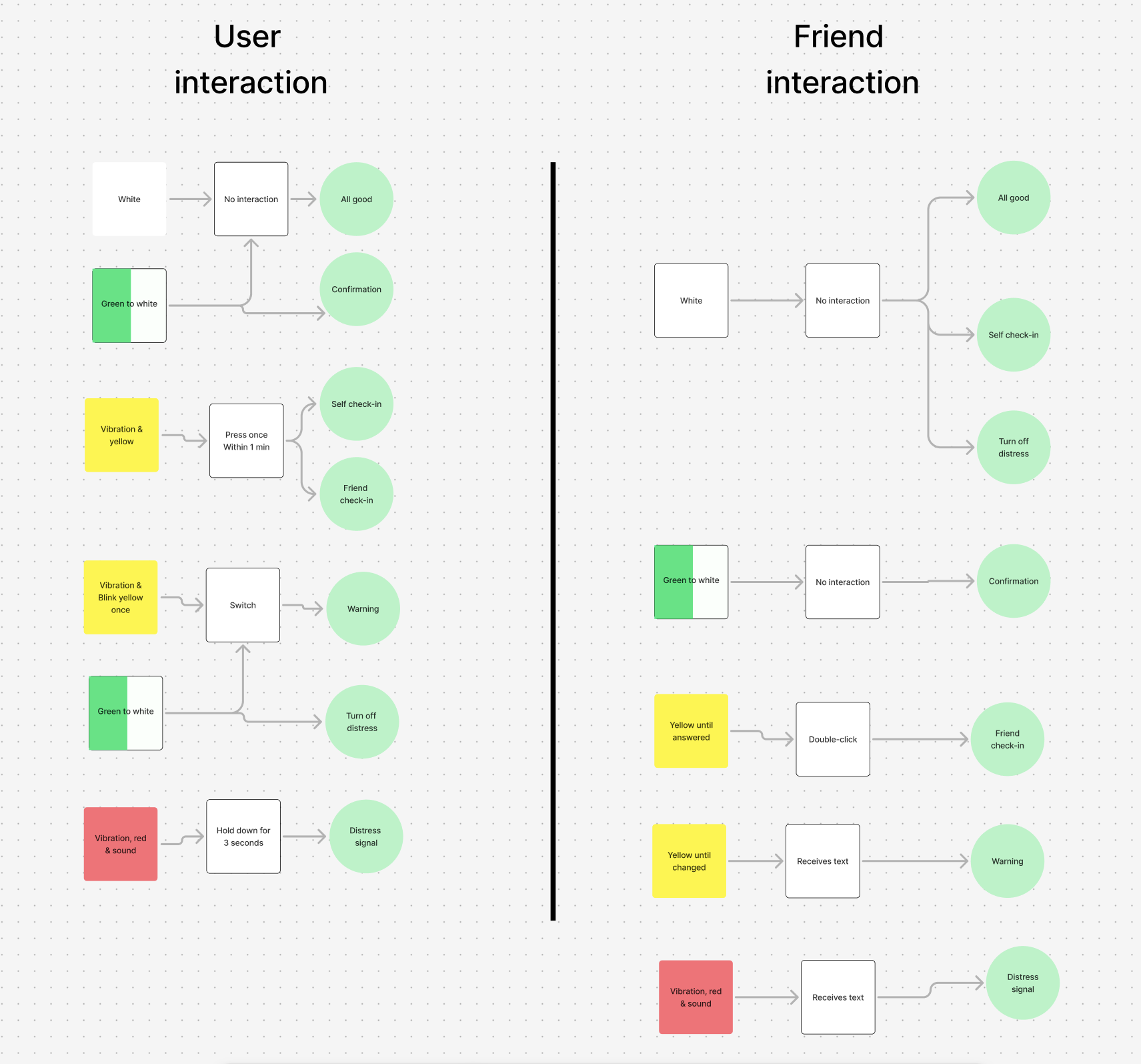
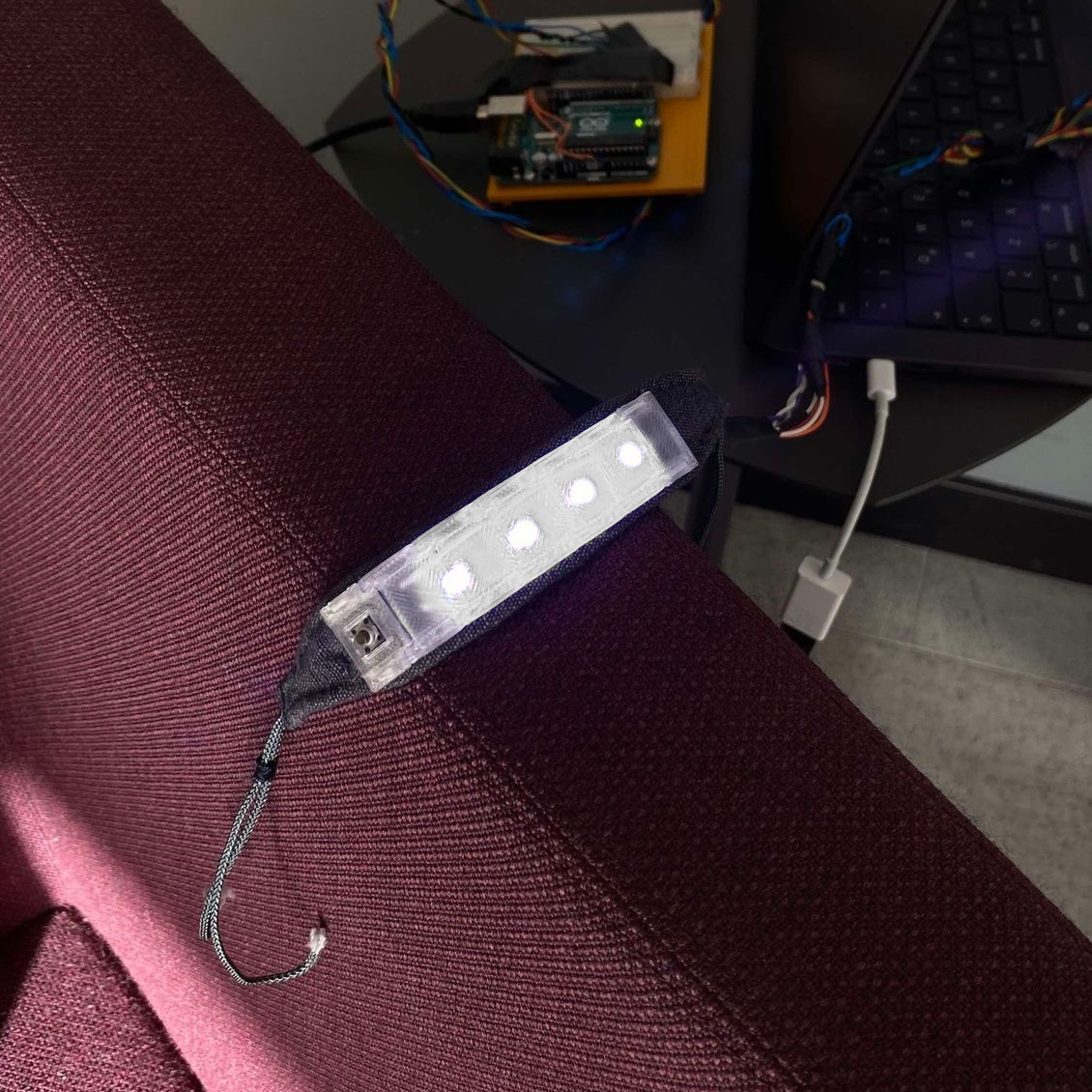
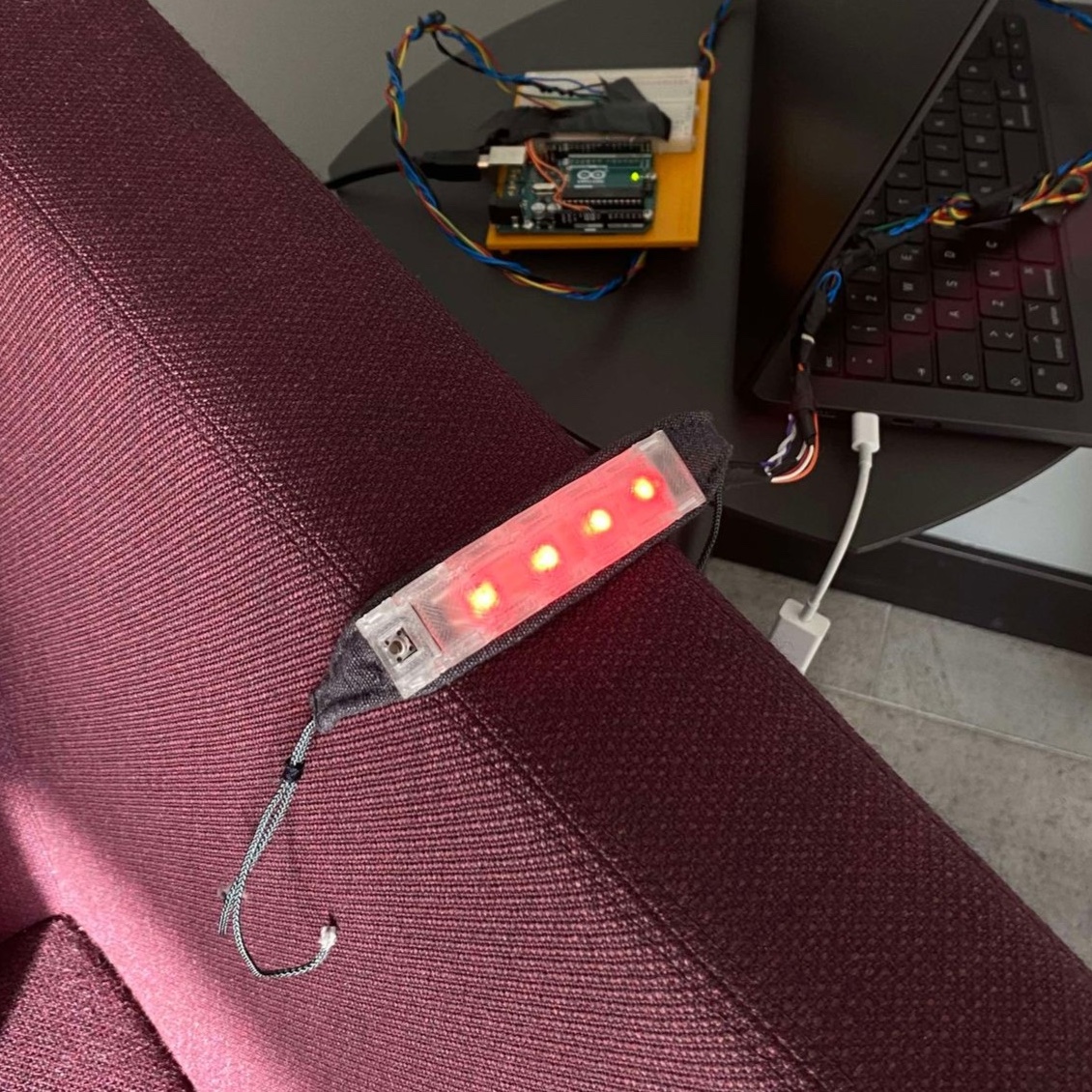
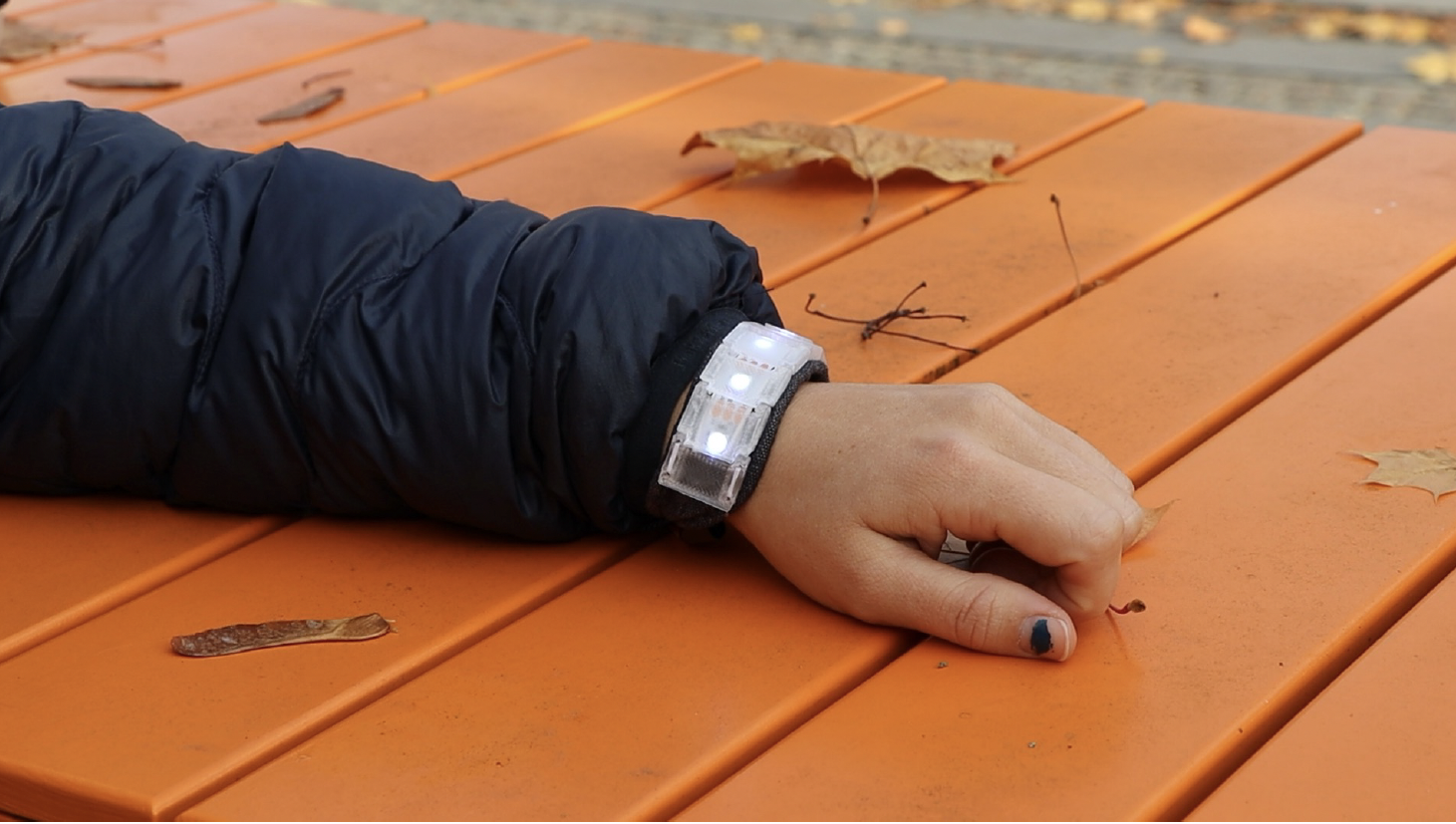
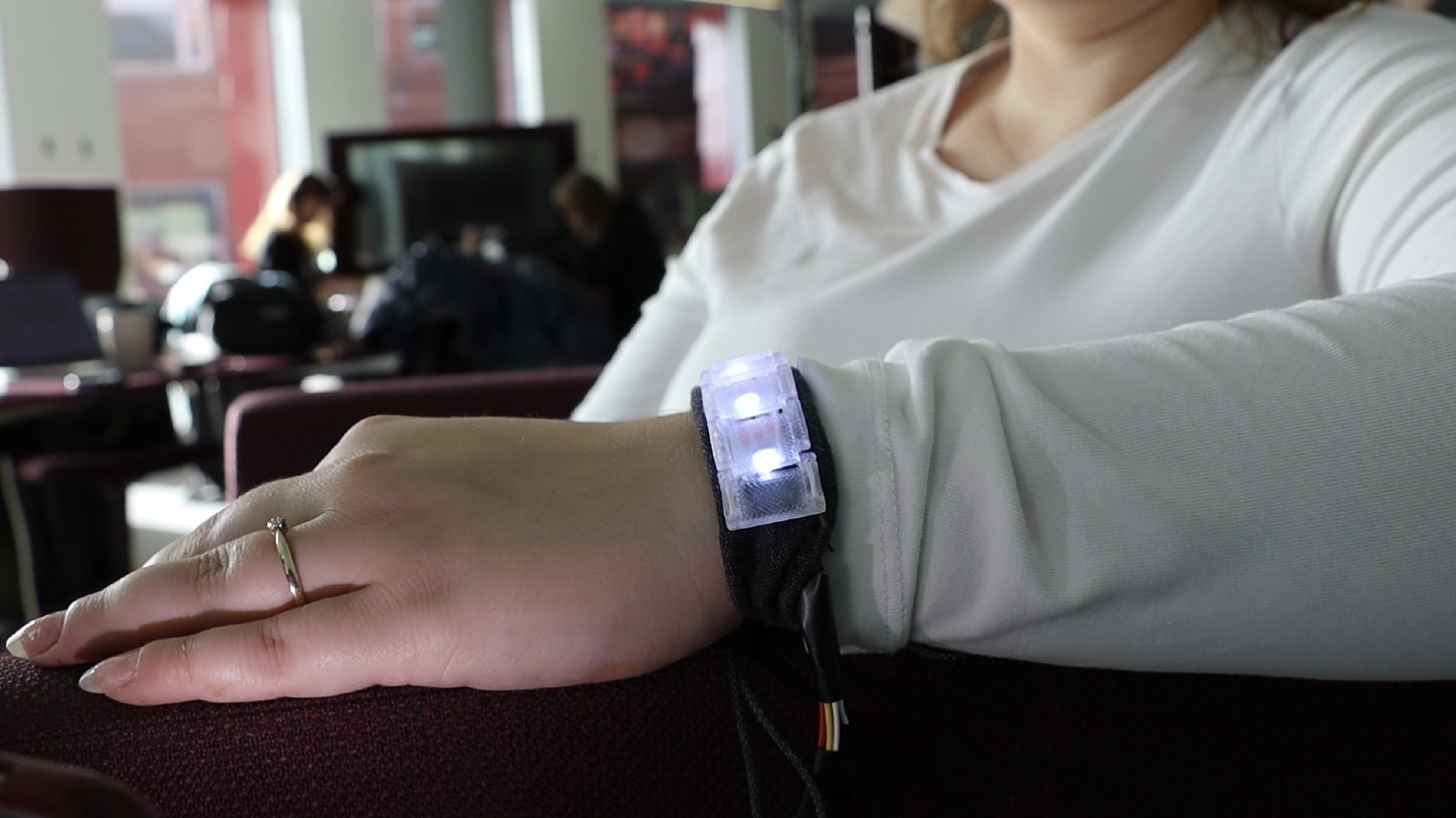
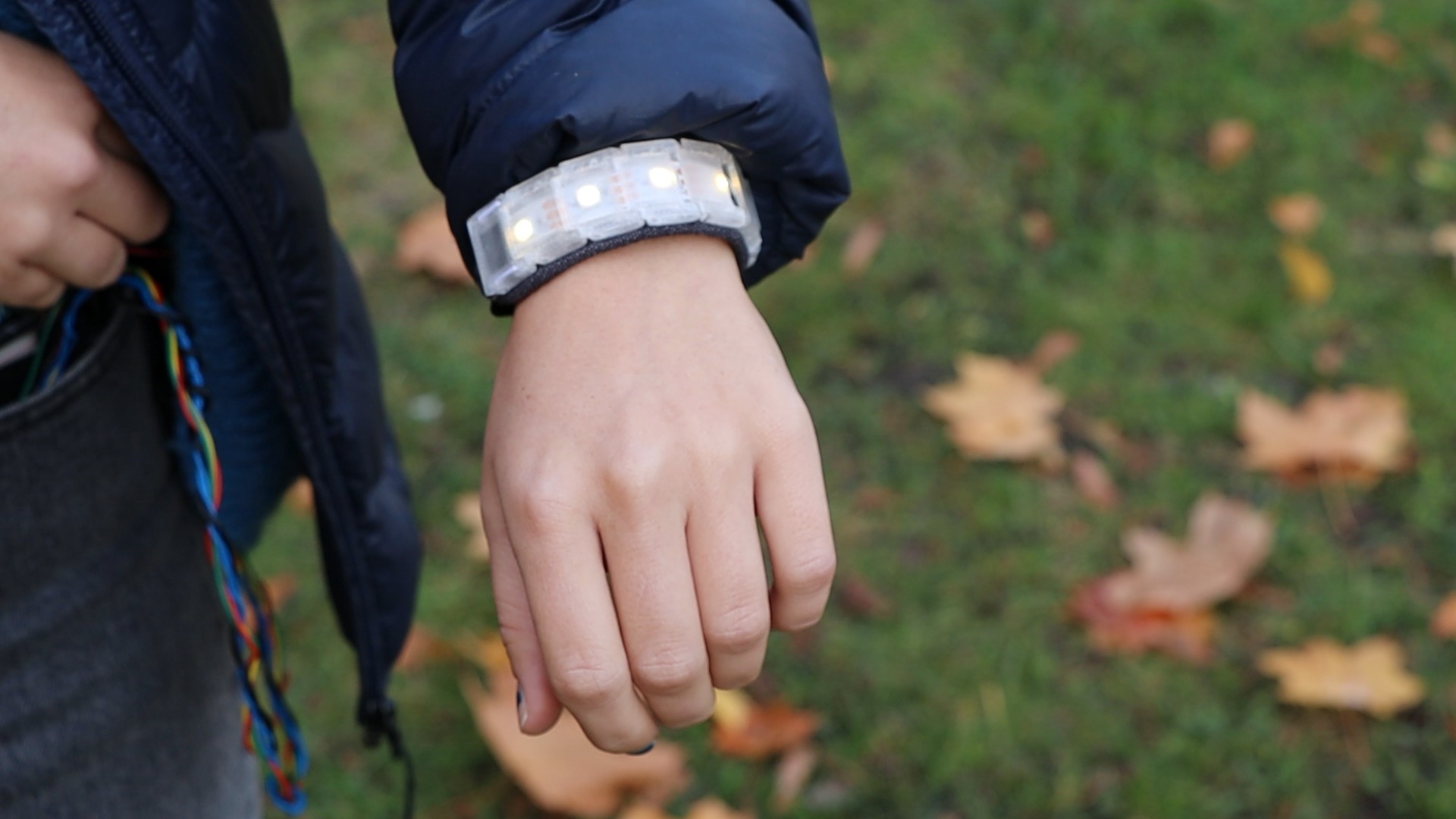
- Idle — white
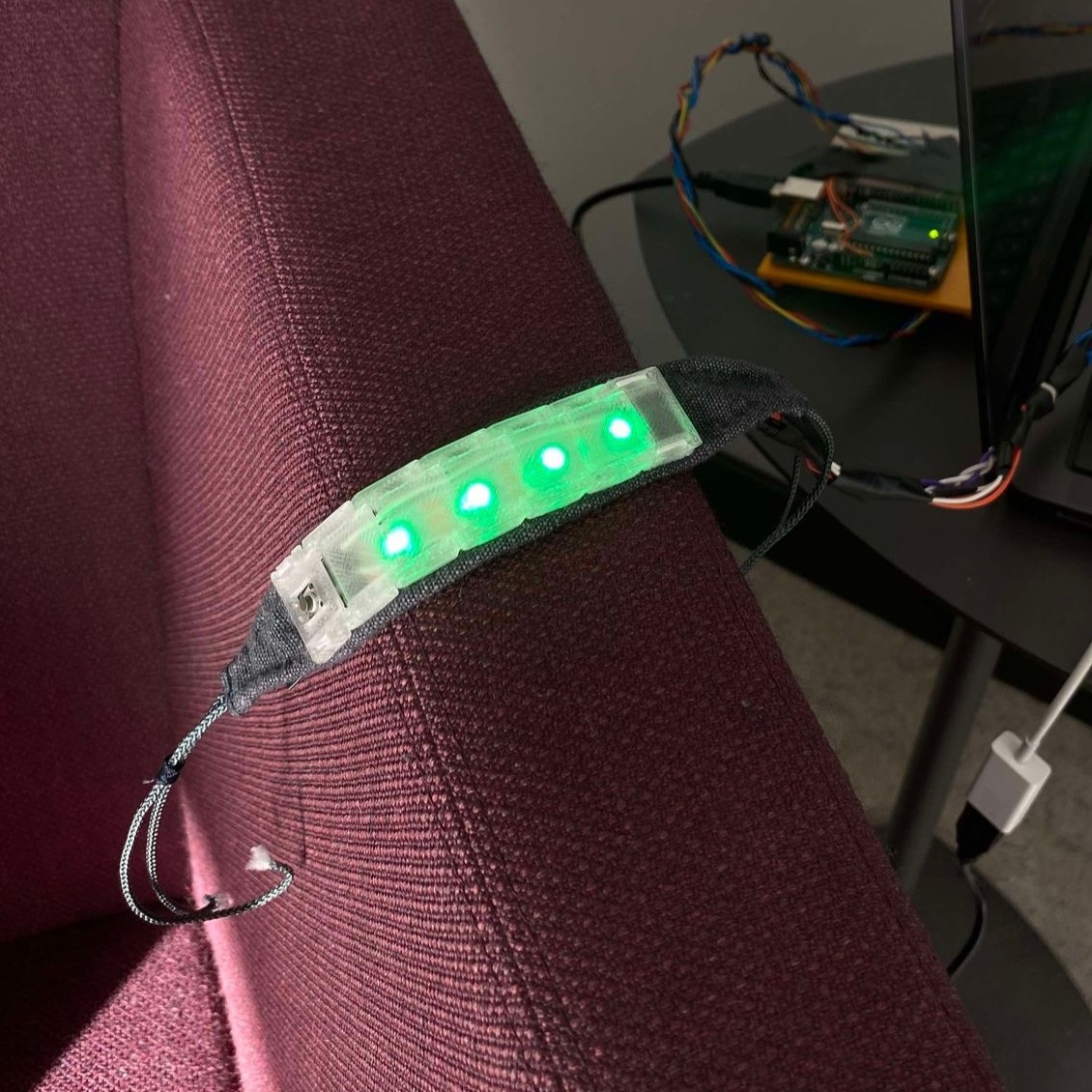
- Confirmation — green
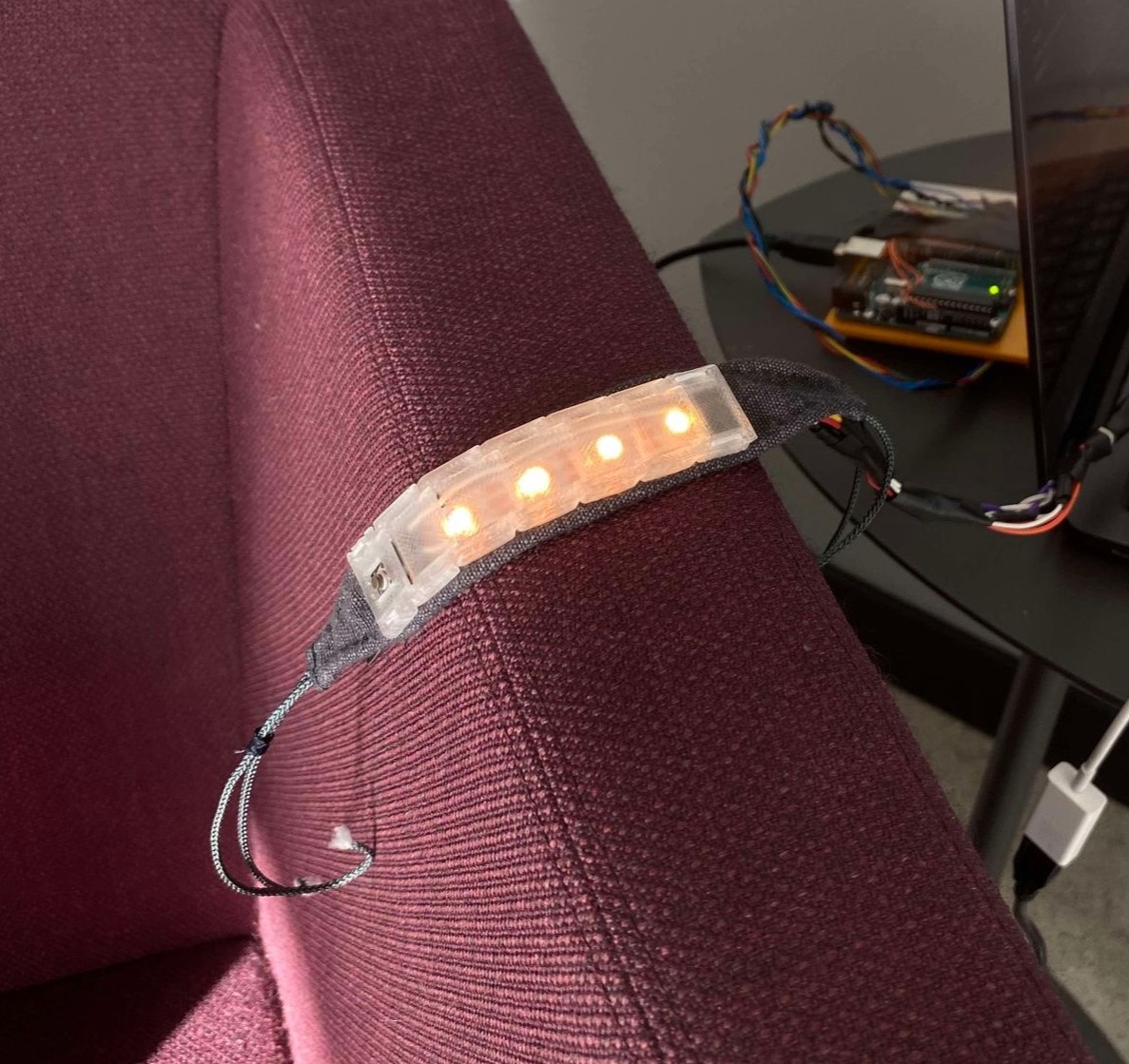
- Warning — yellow
- Distress — red
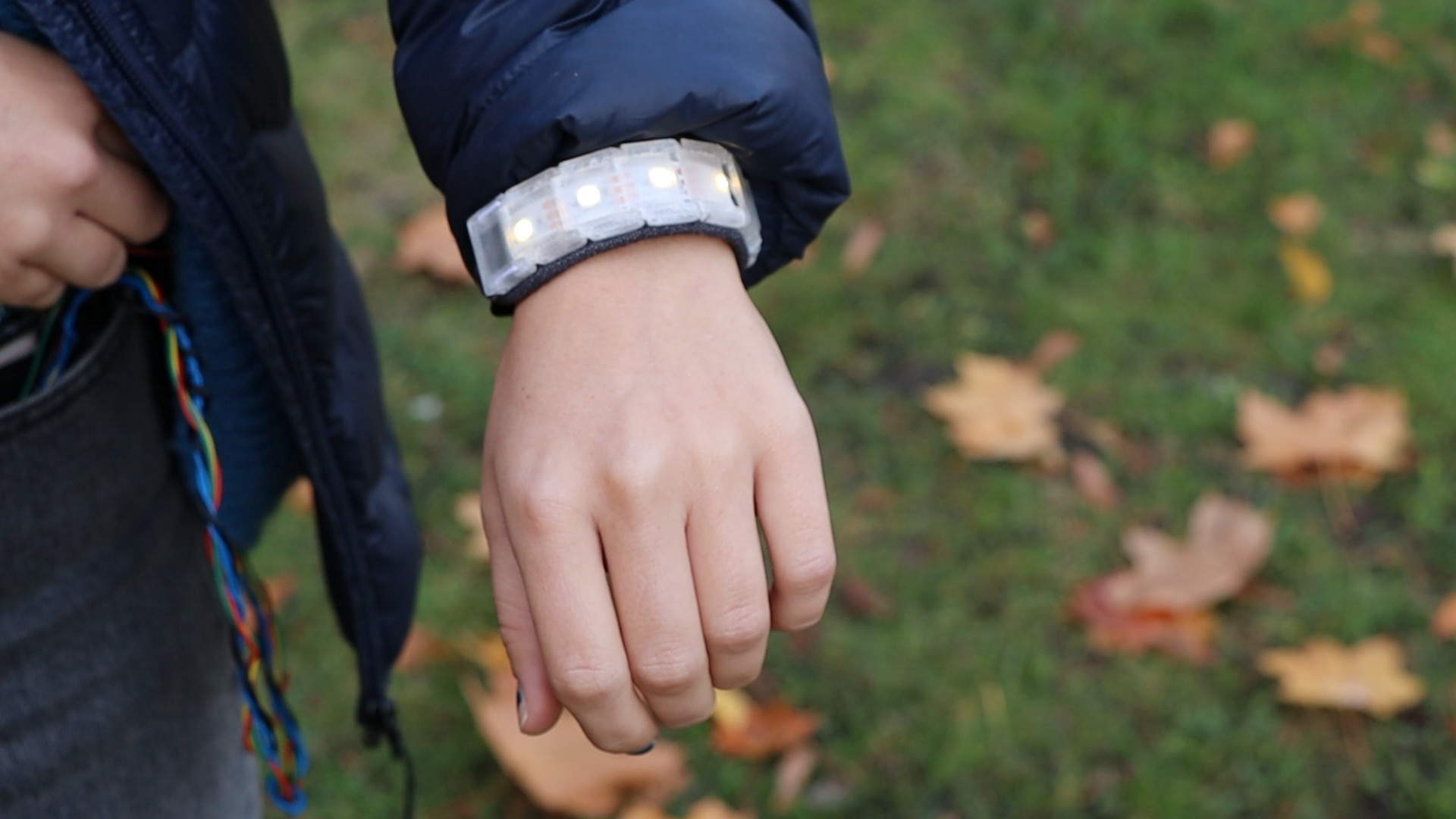
Solo hiking is often avoided out of fear of harassment, injury, or getting lost — a barrier that falls disproportionately on women and other minority groups. TrailMate is a two-way bracelet system, one for the hiker and one for a trusted partner at home, that keeps both sides quietly aware of each other and lets either one raise an alert.
Solo hiking isn't equally safe for everyone
Hiking is often described as a benefit to health, but not everybody gets to enjoy it as freely. Women, queer people, people of colour and other minority groups are underrepresented in solo hiking, partly from fear of harassment and partly from fear of accidental injury or getting lost.
The research question driving the project: how can a wearable device favour solo hikers, fostering a sense of companionship and improving both safety and emotional well-being during their hikes?
Tarek — individual: filmed and edited the project video, including the final video montage
Shared (team of 4)
Full design process — research, ideation, prototyping and testing
From social sports to solo hiking
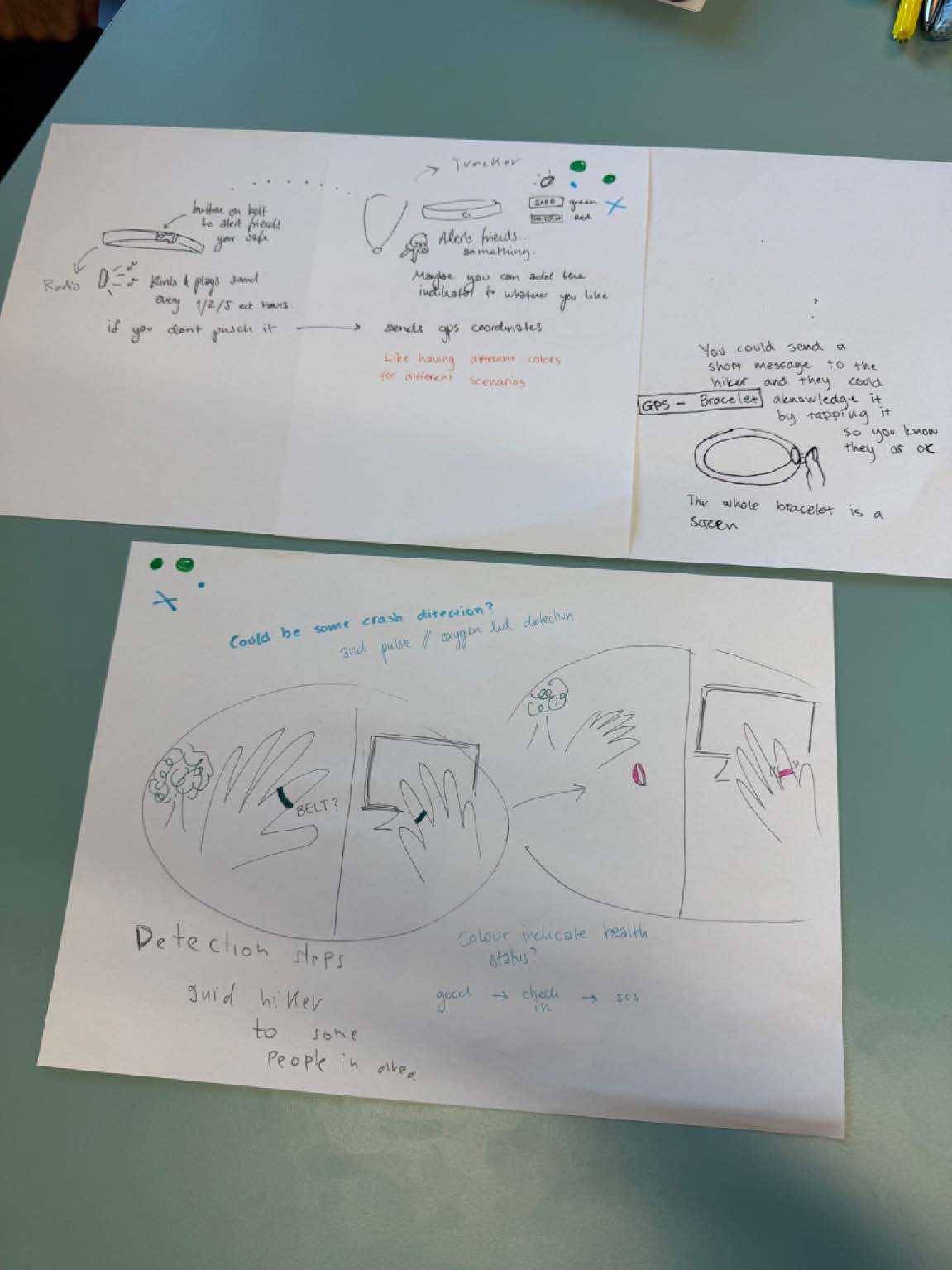
Mind-mapping social sports narrowed the focus to hiking, then to women and minorities who hike solo. Ideas came from 6-3-5 brainwriting — three sketches per member, voted on by the group.
The two top ideas — a check-in bracelet and a health-status ring — were merged into one bracelet system, chosen for comfort and clearer colour visibility while hiking.
Tape, paper and string first
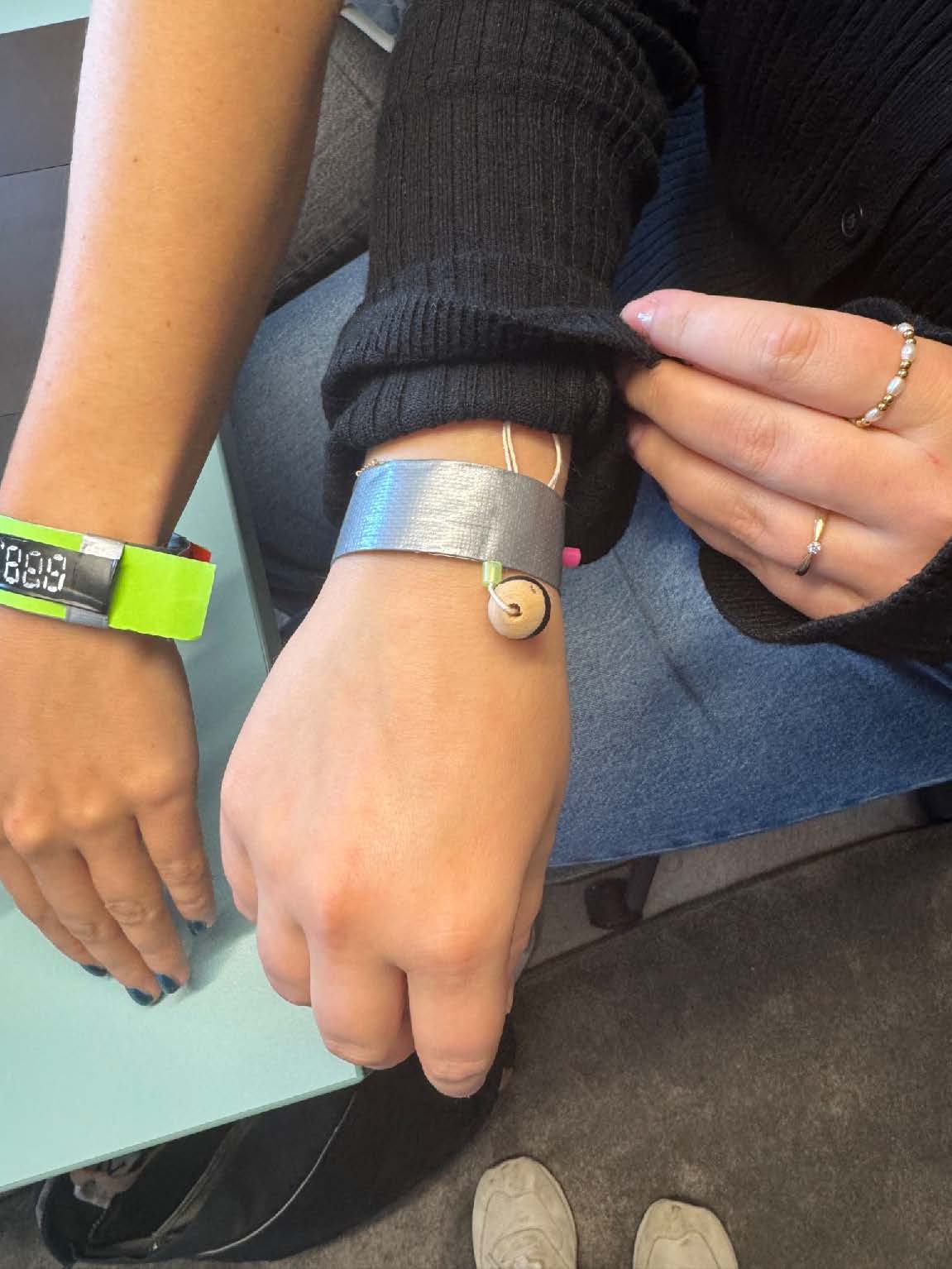
A low-fidelity prototype came first: two bracelets built from tape, paper, string and pearls, one for the hiker and one for the partner, the partner's bracelet operated with a Wizard-of-Oz technique — pulling different coloured paper through it to simulate status changes. Two semi-structured interviews (three women, one man, ages 20–30) tested the concept against a written hiking scenario.
Feedback reshaped the design for the working prototype: the two separate bracelets were merged into a single unit, the emergency self-indication tag was dropped in favour of a simpler interface, and a new "warning" mode was added for situations between a routine check-in and full distress. The feedback system was expanded to auditory, haptic and visual signals together, and GPS coordinates are sent as an SMS rather than only shown on the bracelet.
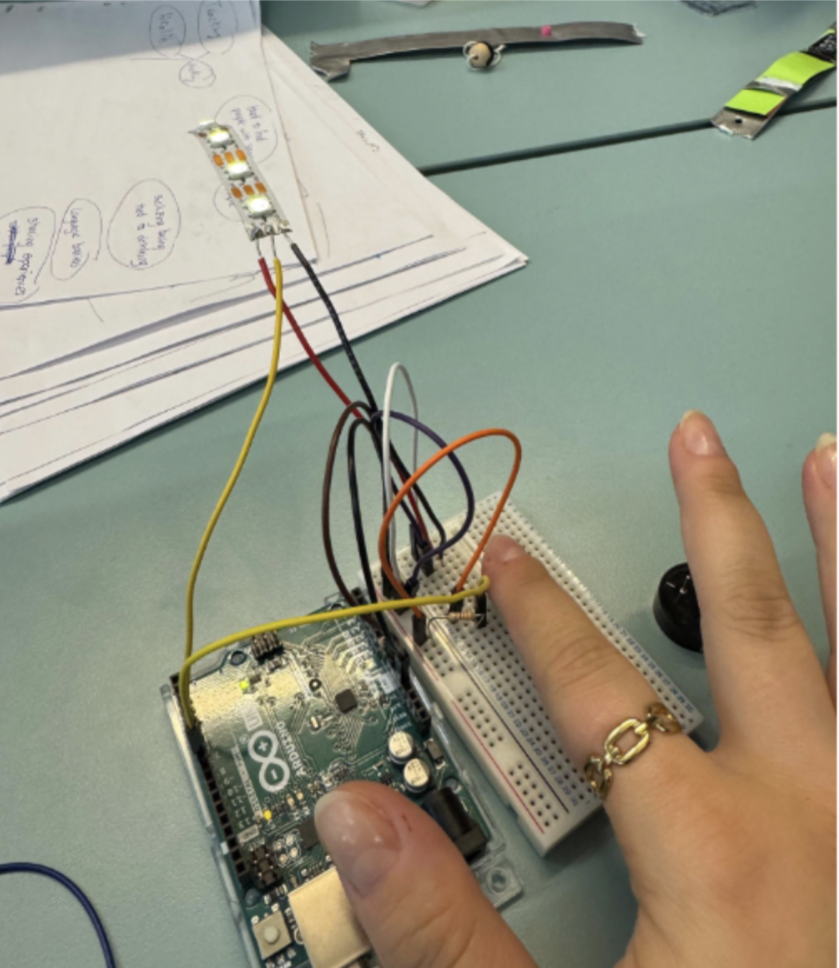
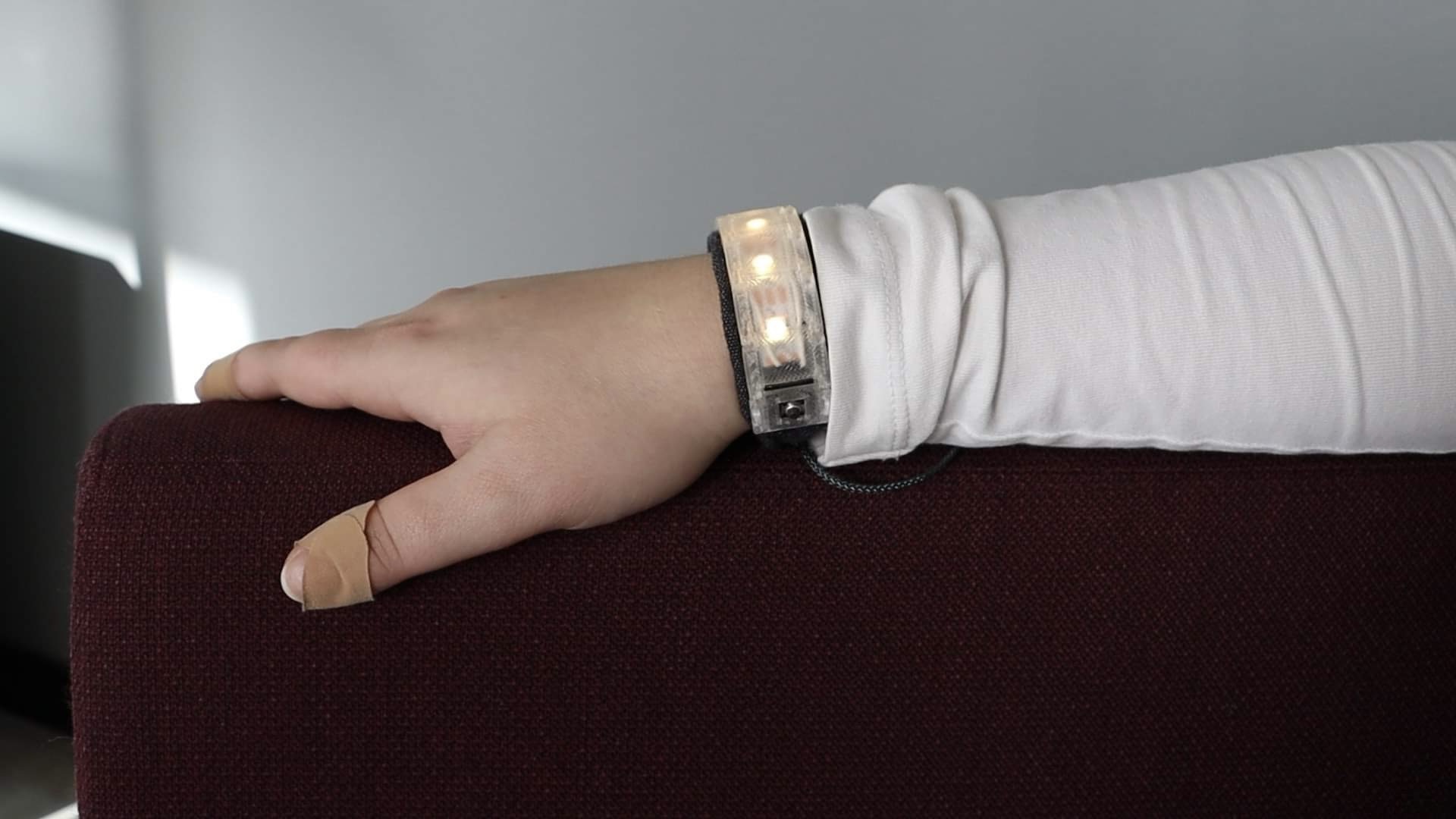
The working prototype ran on an Arduino Uno with a button and an LED strip cycling white, green, yellow and red. The band was hand-sewn from fabric sized to hold the LED strip, button and wiring; the links covering the LED strip were modelled in Fusion 360 and 3D printed in transparent PLA, designed to click together and rotate independently so the band could wrap the wrist.
Four states, two bracelets
What the pilot interviews changed
Both changes came directly out of the pilot interviews.
Two separate bracelets, an emergency self-indication tag, and status shown only through colour.
Users didn't want to buy or carry two different devices, and colour alone excluded people who couldn't rely on sight.
One merged bracelet design, an added warning mode, and status through colour, vibration and sound together.
A single unit and a middle alert level matched how people actually wanted to signal; redundant feedback channels meant no one mode had to carry the whole message.
Sound, touch and light together
The feedback system was refined to combine auditory, haptic and visual signals so no single channel carried the whole message and people with disabilities weren't excluded. GPS coordinates are sent as an SMS text message rather than shown only on a small screen, since phones can read texts aloud for people who are visually impaired.
How four students described it
The working prototype was evaluated through two semi-structured group interviews with four students aged 20–30. Asked to describe the product in one word, participants used: effective, comforting, direct, connected, safety, responsibility, and "peace of mind".
Opinions split on the red distress light — some felt it could scare off a potential attacker, others worried it would make the situation more dangerous by revealing the alert. Participants also asked for a more discreet form, suggesting a necklace or ring instead of a visible bracelet, and raised questions about battery life and indication.
Left for future work: further evaluation of a mid-fidelity prototype before committing to high-fidelity builds, a more delicate physical design, and deeper testing of whether a visible alert helps or endangers the hiker in a real confrontation.
Download full report (PDF)