Signalling
Helmet
A gesture-activated turn-signal helmet and glove system for cyclists
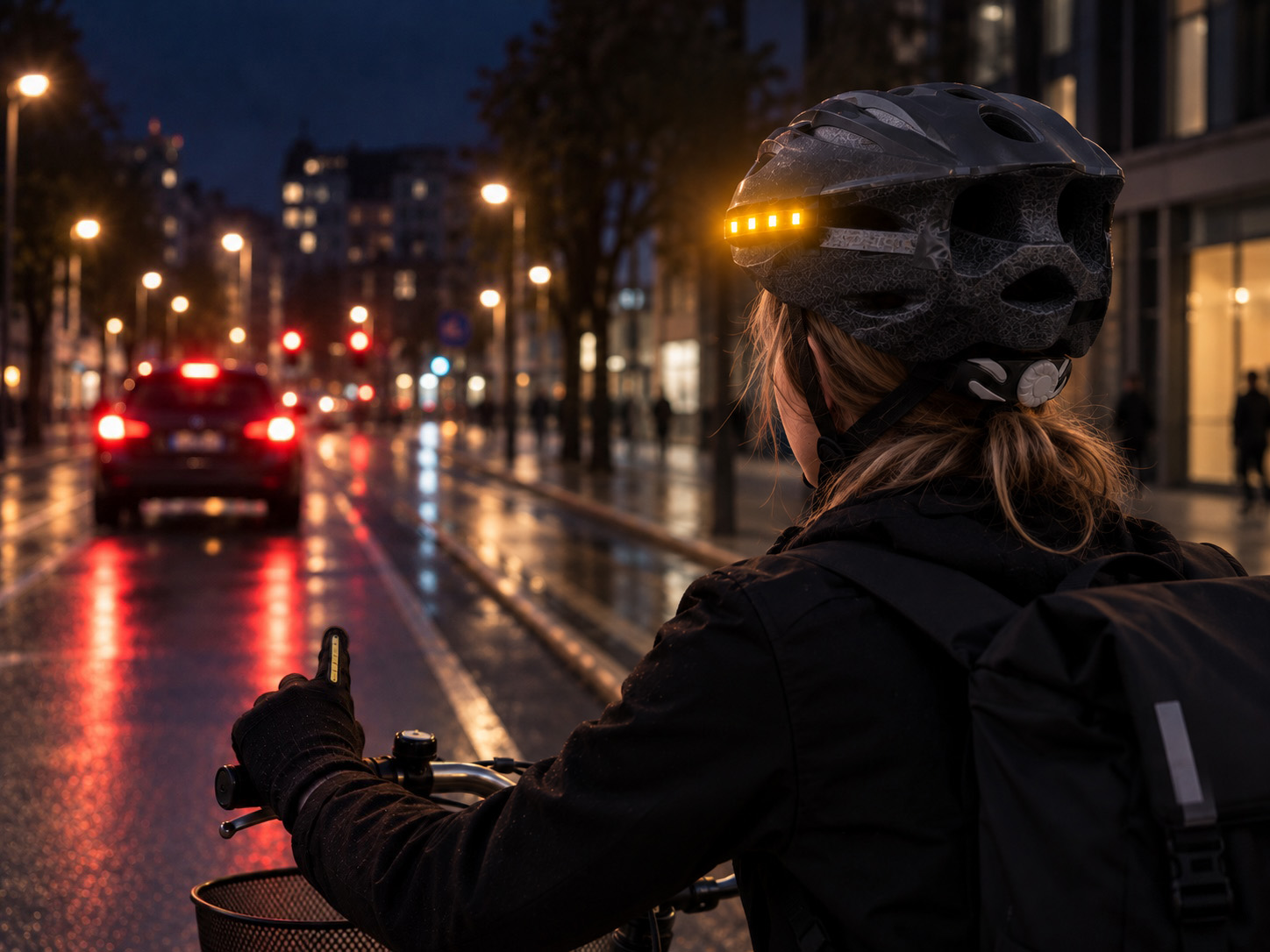
Signalling shouldn't cost cyclists control of their bike
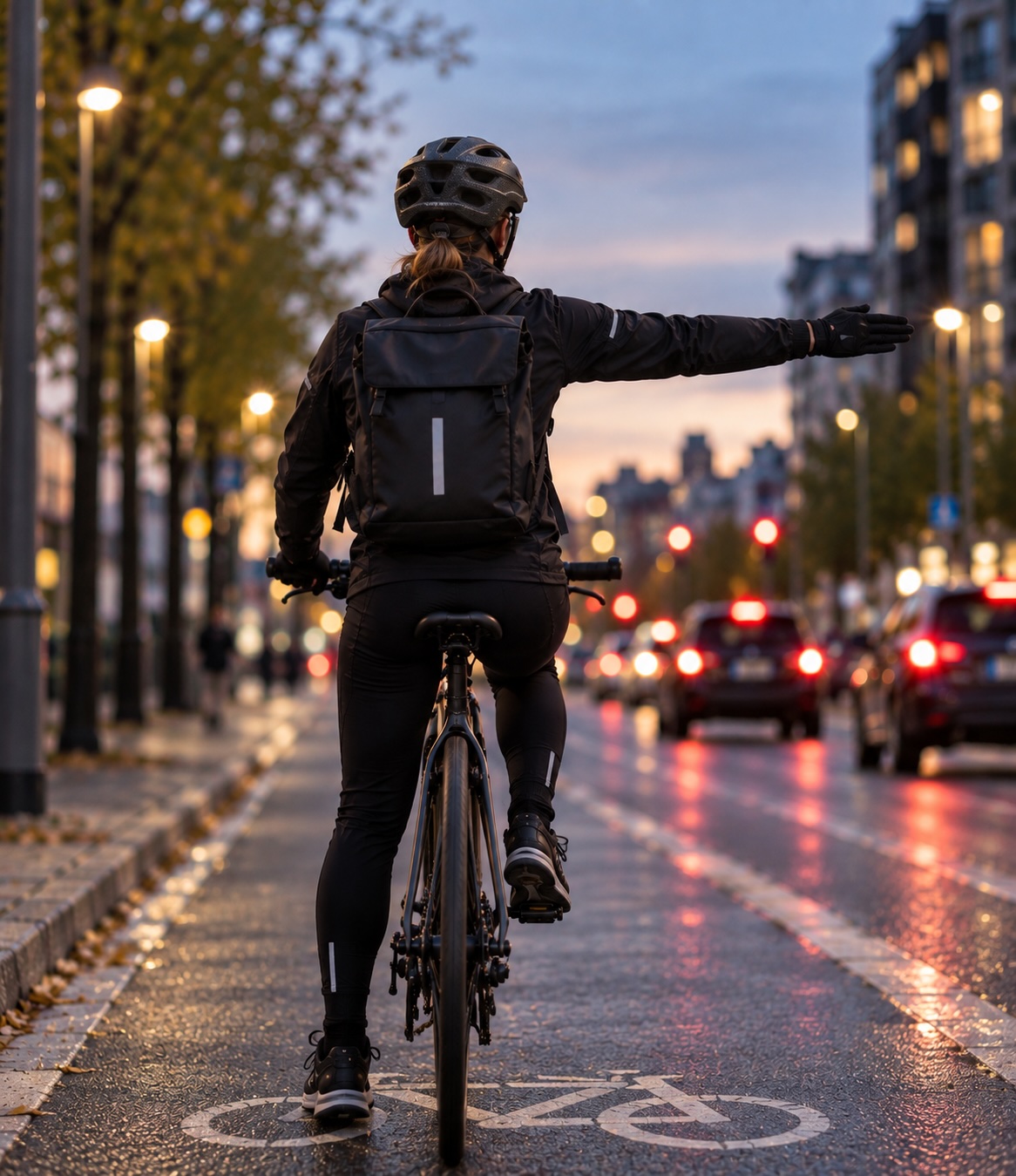
Most bicycles, especially older ones, have no built-in turn indicators. Cyclists rely on arm signals, raising a hand from the handlebars to alert others — reducing control and increasing risk, particularly for older cyclists who find it hard to release the handlebar and turn to look behind before turning.
Swedish cyclists face a significantly higher risk than car occupants — 10 times greater chance of a fatal accident and 20 times higher likelihood of an injury requiring hospital treatment, per million kilometres travelled.
Looking for a wearable that matters
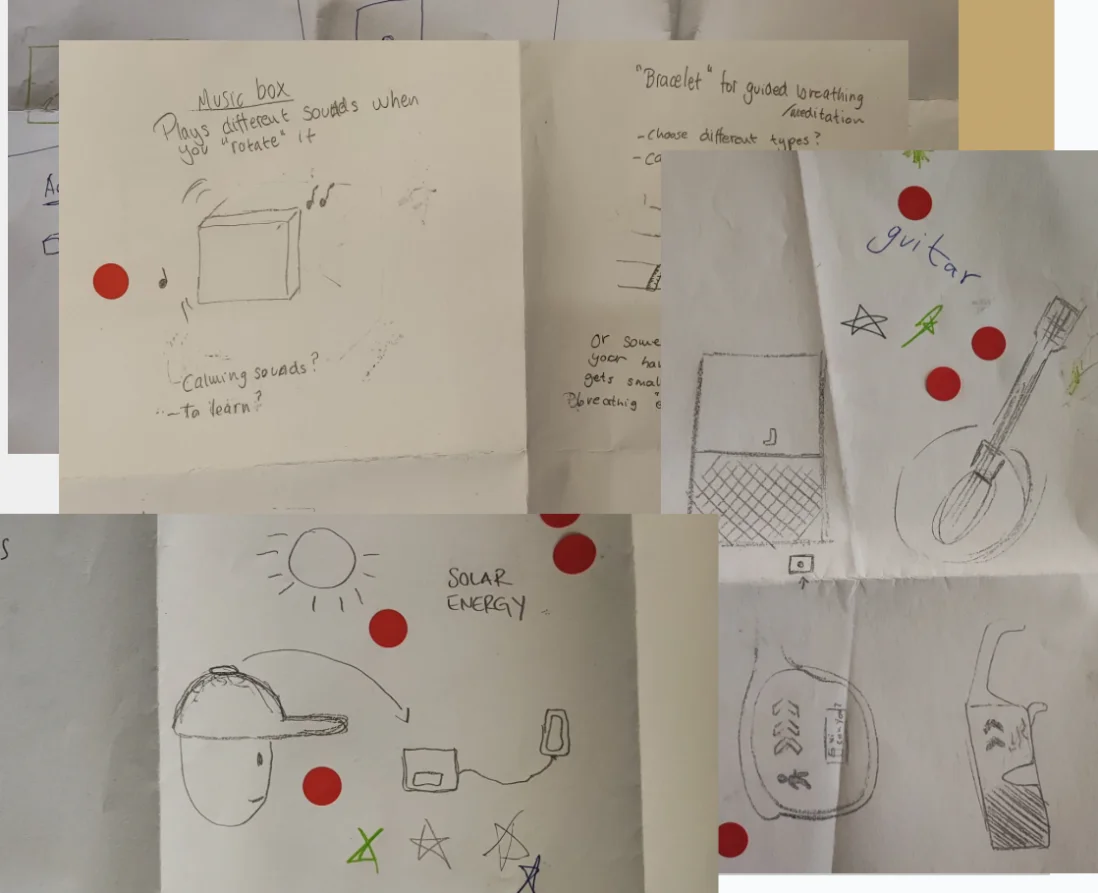
The team of five set out to build a wearable that could make a real difference, under the theme "wearable future product". We researched tangible products for inspiration, then each member brought at least three ideas to a brainstorming session.
Four concepts were shortlisted by dot voting — a solar-powered hat, a guitar that teaches by light and tone, a garbage bin that rewards correct sorting with music, and two connected music boxes for sending emotional messages between users. We used the Six Thinking Hats method to weigh each from multiple angles, then dot-voted again. The solar hat won, designed with a power bank and tactile buttons for a fan or speaker.
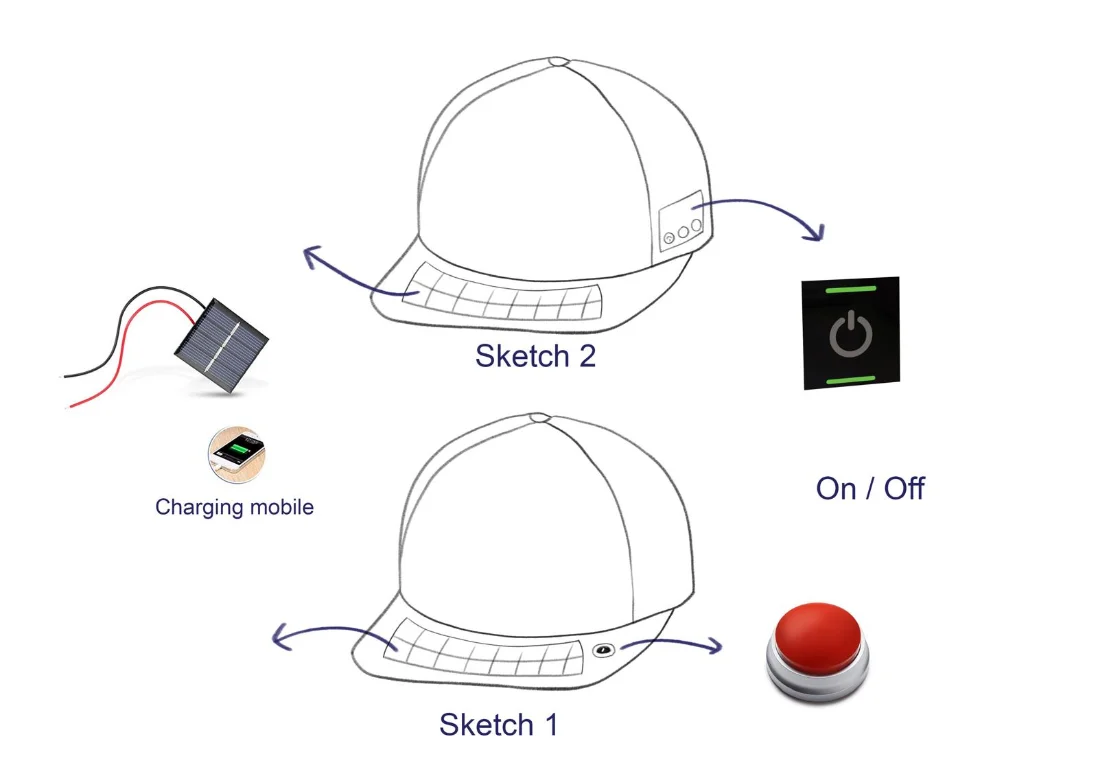
Pitch feedback showed the solar hat's panel was too small to power the planned features, and Sweden's low sunlight made it worse. We stayed within the wearable theme but pivoted to a safety problem: cyclist turn signalling — trading a sustainability angle for a real-world safety issue affecting cyclists, pedestrians, and other road users.
LEDs on the helmet, sensors on the gloves
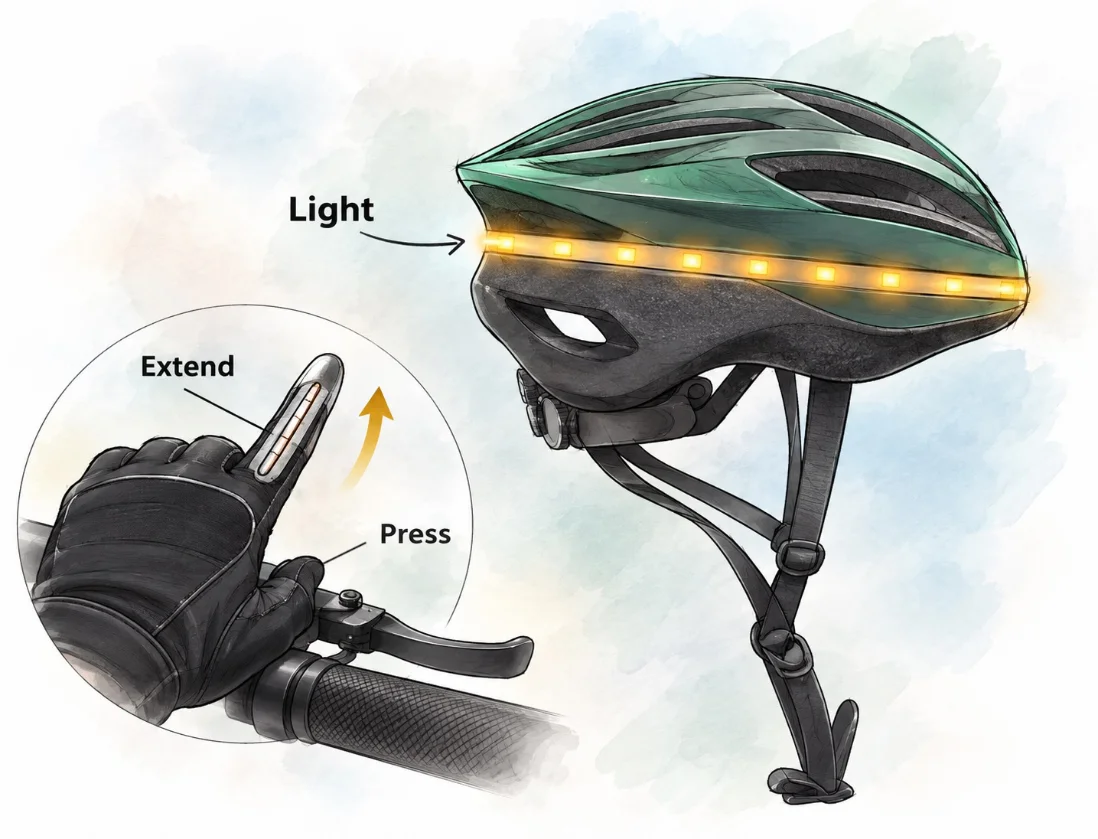
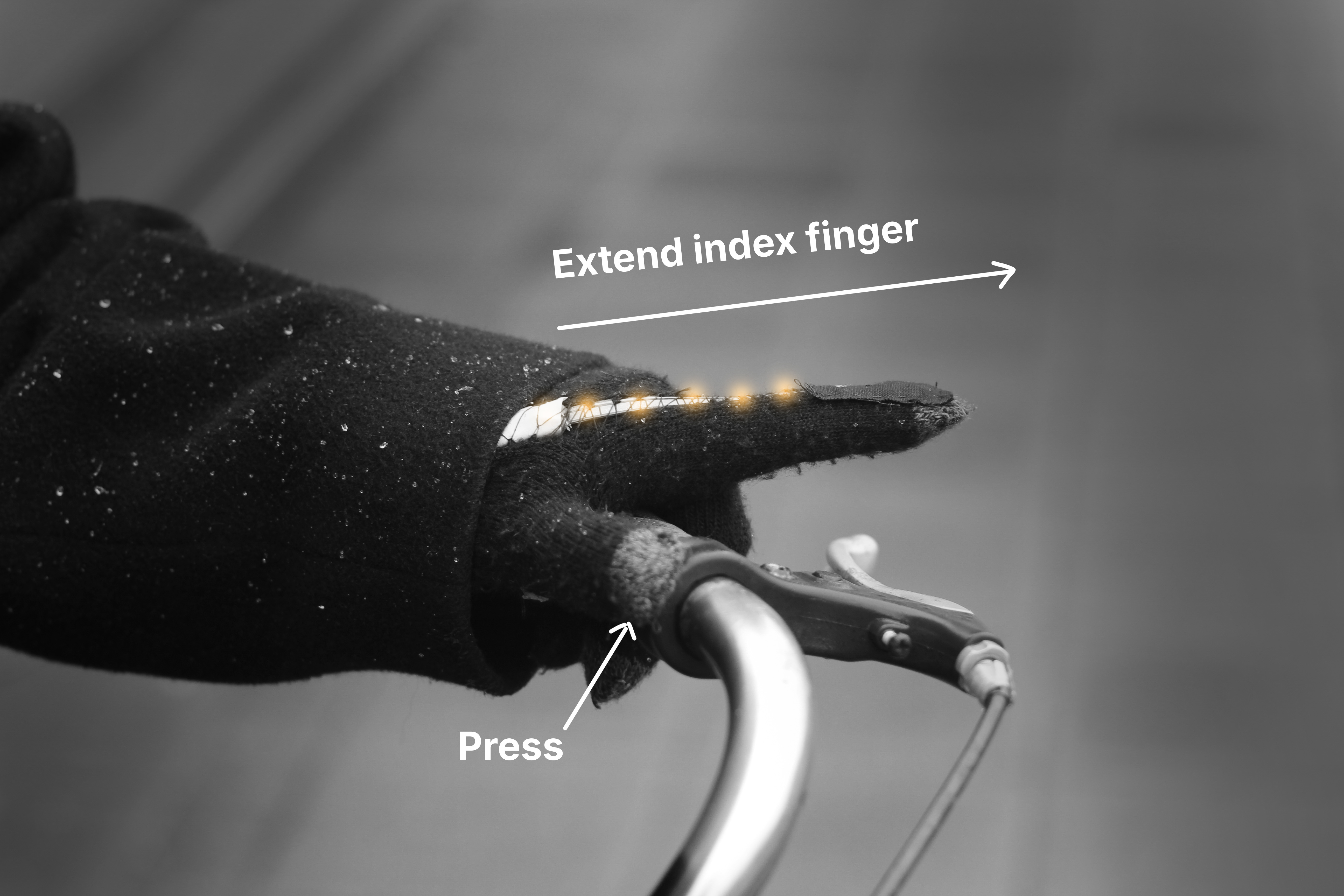
The design pairs LED strips on the sides of the helmet with flex sensors on the gloves' index fingers. Bending the finger sends a signal to light the corresponding indicator — letting cyclists signal direction without leaving the handlebars.
Interviews with two cyclists, run before building the prototype, showed fingers move unintentionally while riding. To prevent accidental activation, we added a pressure sensor to the glove: cyclists press their thumb while raising the index finger to trigger the LED — a two-part gesture chosen for being intuitive to make.
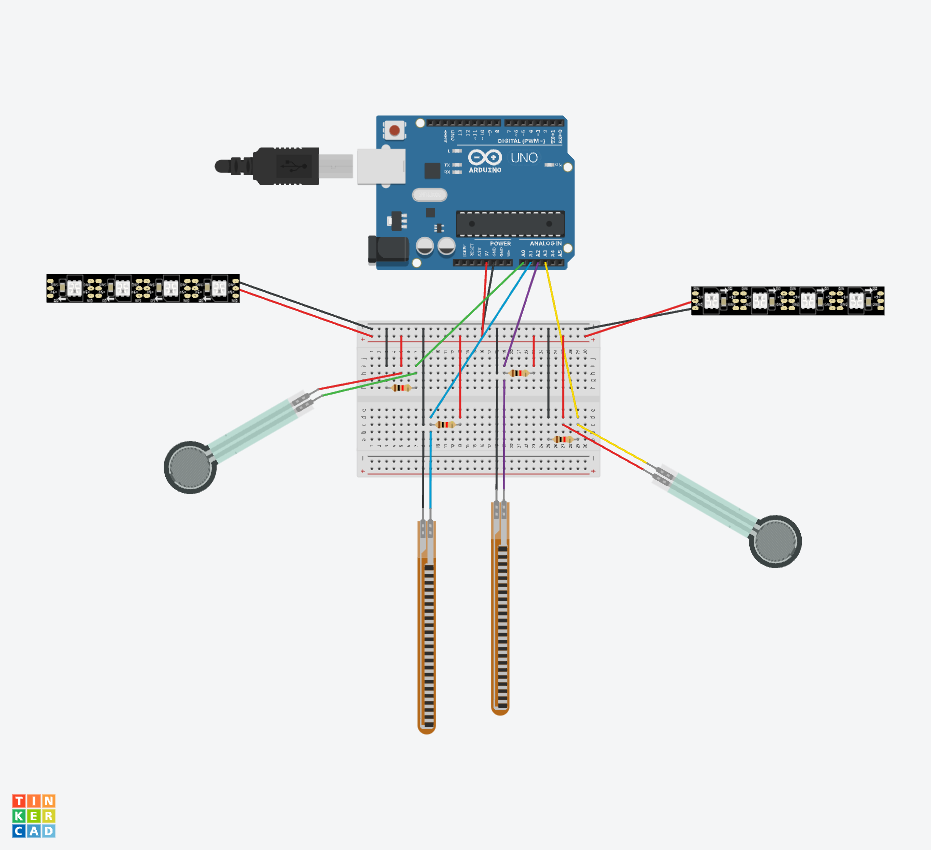
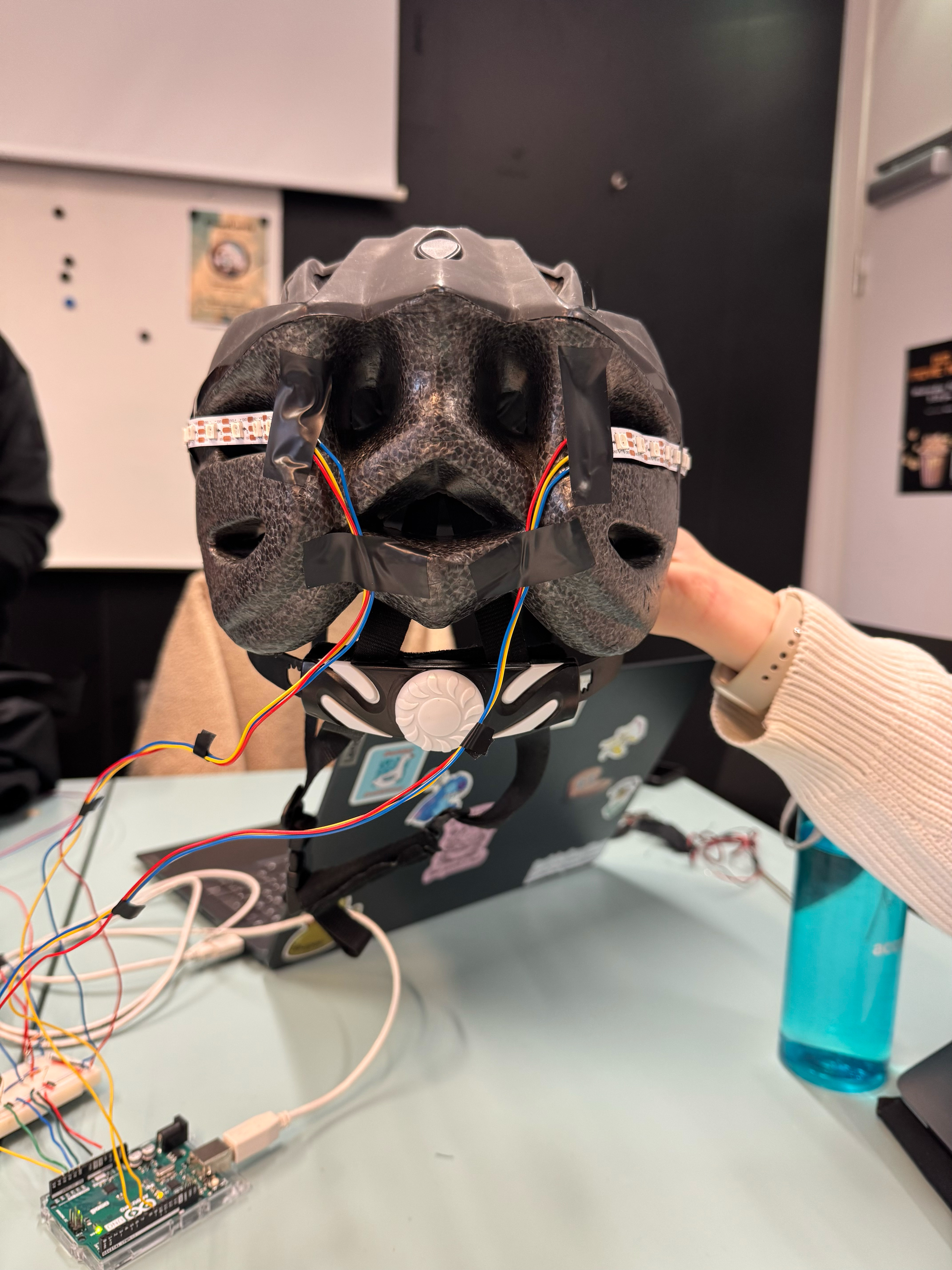
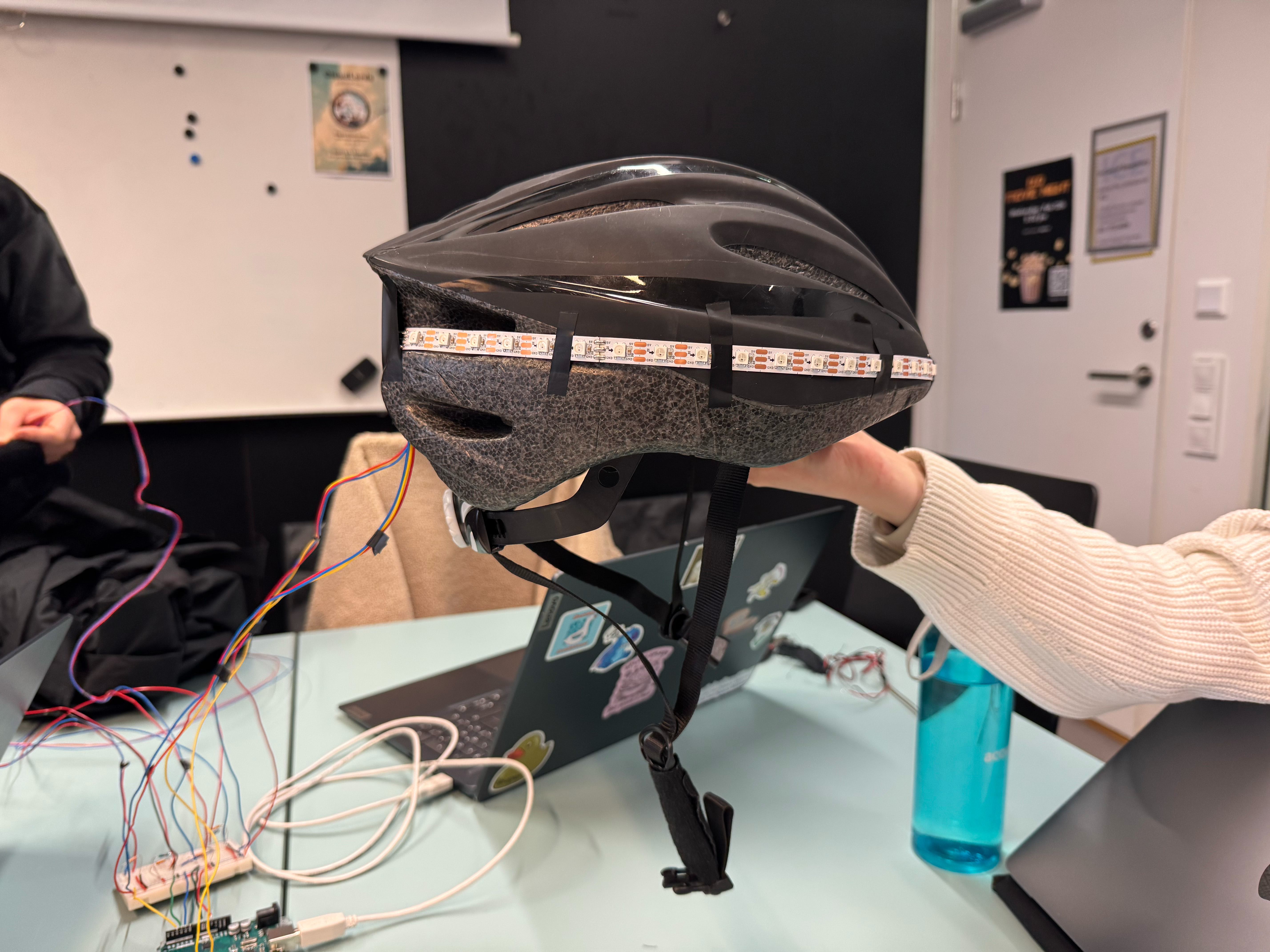
The first build used an Arduino UNO, a breadboard, wires, resistors, two flex sensors, two pressure sensors, and two LED strips. Sensors were tested on the breadboard first to measure resistance and set an activation threshold, then wired to the LED strips and attached to the helmet. Sensors were initially sewn into the gloves with conductive thread, but connections were unstable — we switched to soldering and gluing wires directly to the sensors, secured to the outside of the gloves for stability, and tuned the threshold repeatedly to avoid over-sensitivity.
Two changes from user testing
Two changes came directly out of user testing.
Blue LEDs, blinking in groups of three from back to front.
Users associated blue with emergency-vehicle lights, and the sweeping pattern read as unclear.
Orange LEDs, all lighting at once.
Orange matches conventional car turn signals; a single synchronized flash reads faster than a moving pattern.
Signals other road users can read
Clear LED signals and simple finger gestures made the cyclist's intentions easier for other road users to understand. User testing also showed the need for vibration or visual feedback on the glove so cyclists can confirm when a signal is active.
A two-week evaluation
We ran a two-week evaluation: cyclists tested the prototype first, then pedestrians assessed how clearly the system communicated a cyclist's intentions. Six users of different ages and genders — teachers, students, and regular cyclists — took part in ~10-minute sessions of observation, feedback, and a questionnaire.
Cyclists couldn't see the LED from their own helmet and asked for confirmation that a signal had activated — a vibration or sound was suggested, along with different colours, blinking patterns, and more LEDs for visibility. Opinions were split on whether the signal should switch off automatically or need manual deactivation.
Left for future development: a vibration or synchronized light on the glove to confirm activation, colour/brightness customization, and a wireless (Bluetooth) link between glove and helmet to remove the wired connection. Gloves also proved uncomfortable in hot weather, limiting appeal for some users.
Turning a sustainability-themed brief into a road-safety product made the project more concrete and grounded it in a real-world problem. By improving communication between cyclists, pedestrians, and other road users, the system points toward safer streets for everyone.
Download full report (PDF)