Vågmästareplatsen, Hisingen
Our group, named Space, was assigned Vågmästareplatsen — a square in Hisingen, Gothenburg, that connects Hisingen to the city centre. On-site observation and interviews with workers and locals found the square worked mainly as a transit route: most people passed through rushed, without a reason to stop, and even some locals only noticed the market held there after living nearby for years.
A thematic analysis sorted our notes by importance and by how enjoyable or boring the underlying problem felt, grouping them into four categories: reputation, accessibility, activity and aesthetics. Aesthetics and activity came out as the square's clearest gaps.
That led to our research question: how can we inspire social interactions through creating a reason to stop at Vågmästareplatsen? The aim was to turn the square into a meeting point people gather at, rather than just cross.
On-site observation and semi-structured interviews with workers and locals at the square.
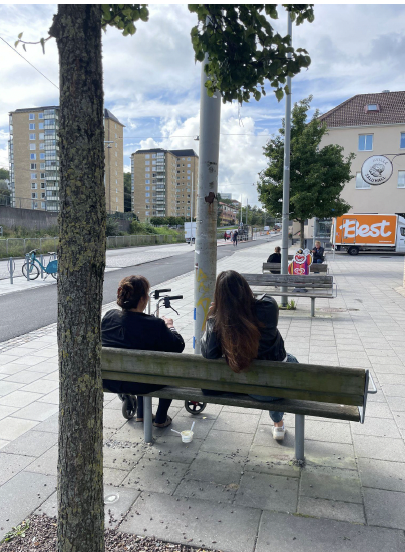
People sitting
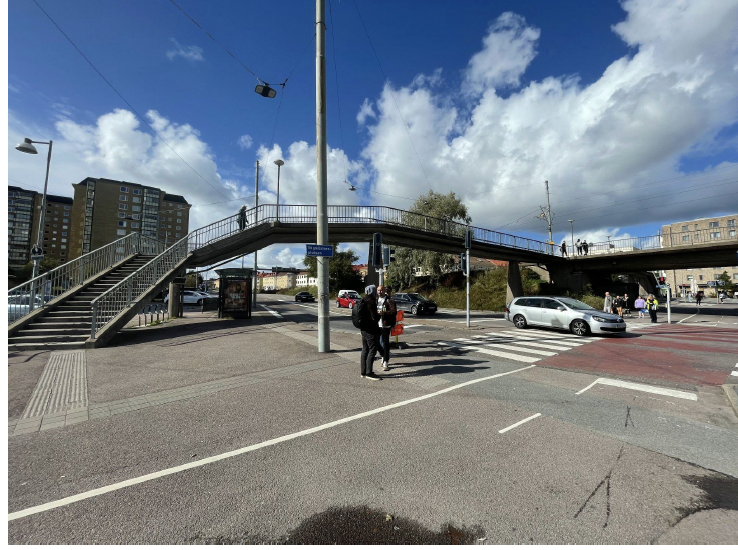
Observing the area
Thematic analysis, clustering sticky-note needs by importance and enjoyment.
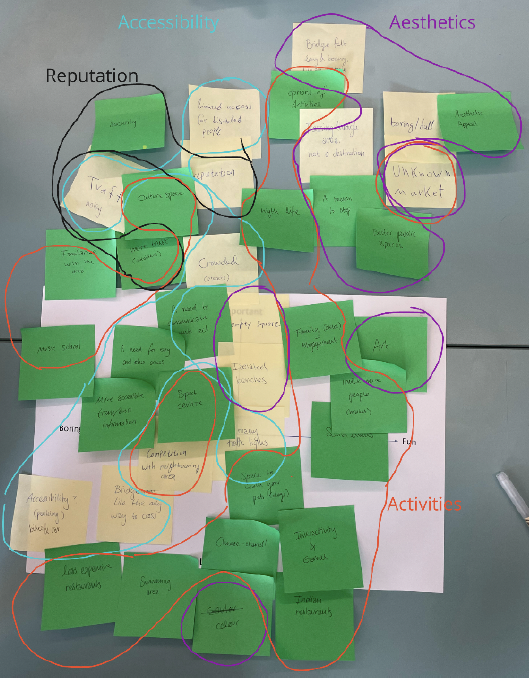
Thematic analysis of observation and interview notes
Ideation with a modified Brainwriting 6-3-5: four people sketching one idea every five minutes, over five rounds.
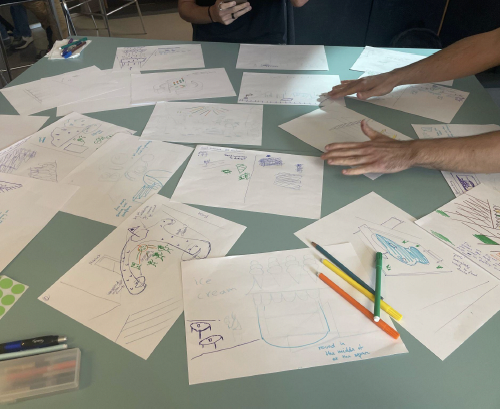
Brainwriting 6-3-5 ideation
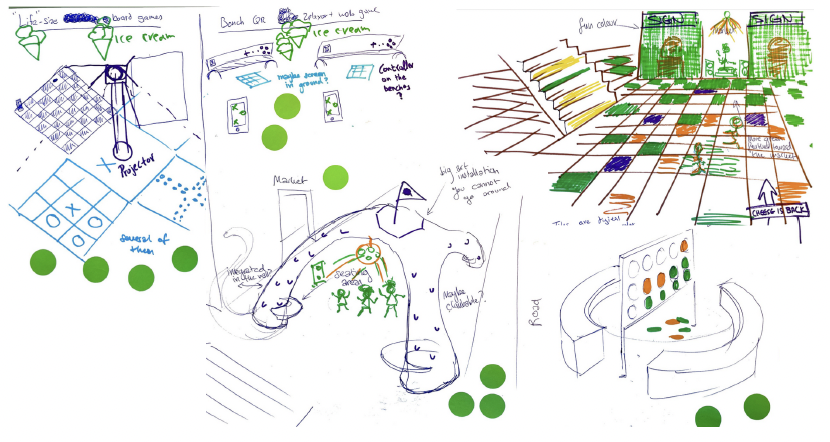
The five favoured sketches
From sketches to a bouldering structure
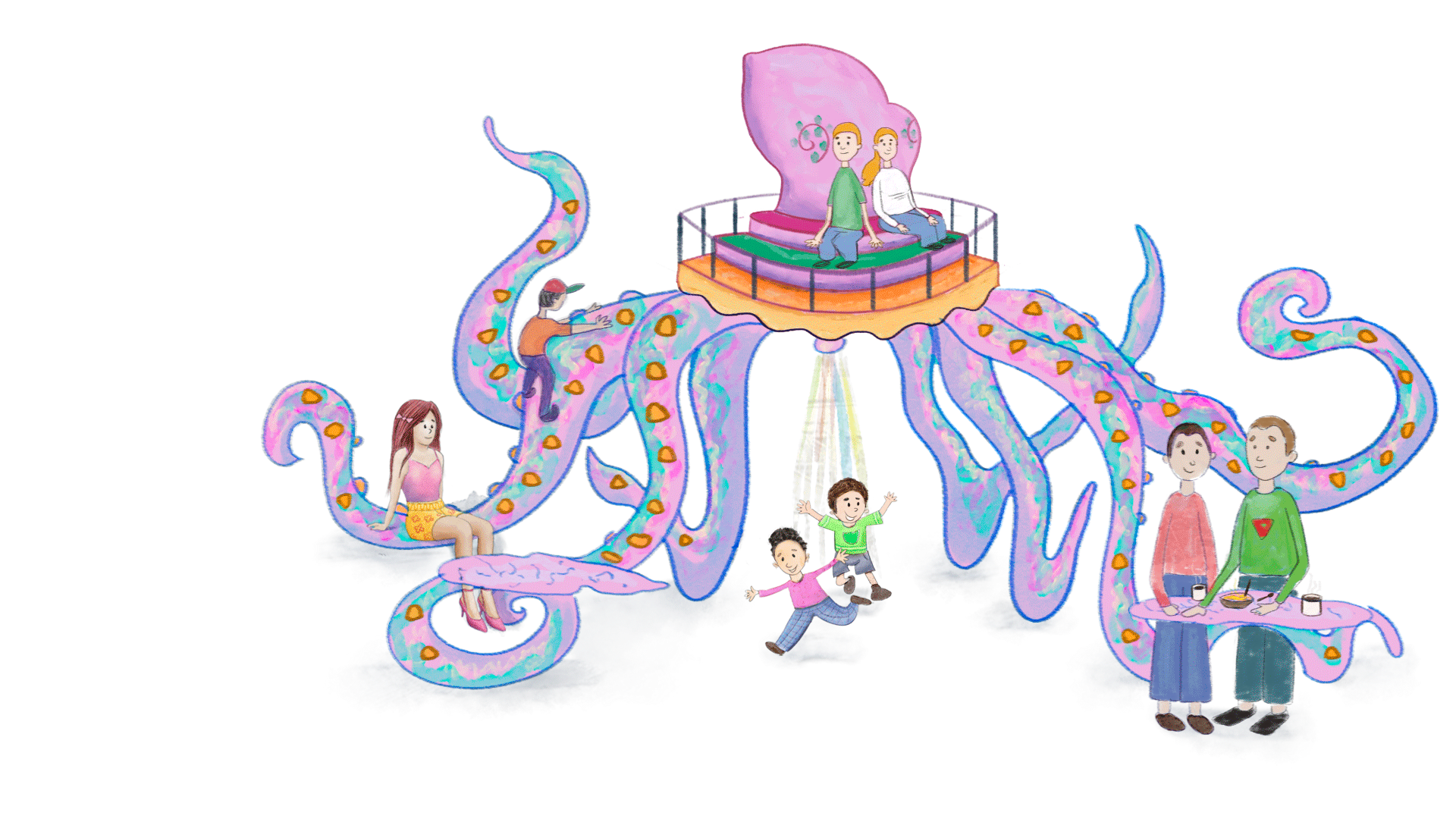
Five favoured sketches were combined into two directions, then narrowed to one: an interactive bouldering structure. The concept was iterated across three prototypes, each tested with semi-structured interviews and a semantic differential scale (Boring–Social, Useless–Useful, Rejecting–Inviting, Boring–Playful, Isolated–Interactive).
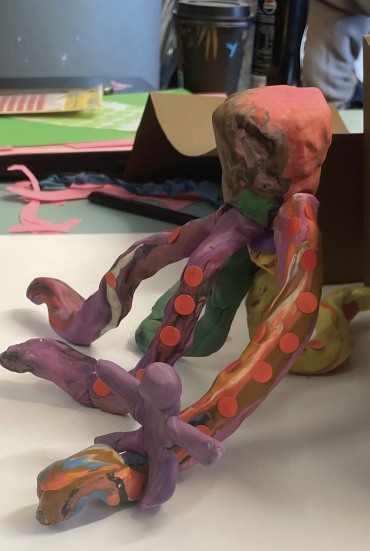
A paper set of the square with a clay octopus, tested against a written scenario and storyboard.
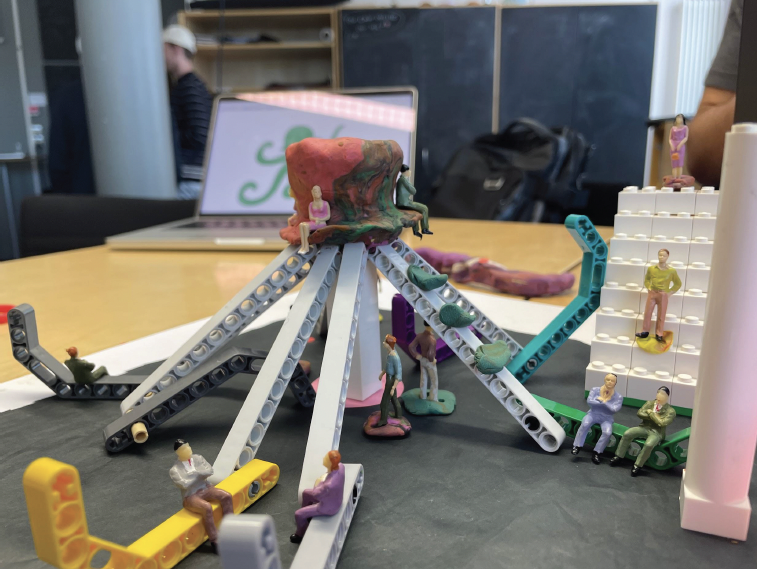
Clay and LEGO combined, adding rubber flooring, benches around the head, adjustable tentacle difficulty, and a colour sensor reading up to five people's clothing at once.
Tentacles scan the colours of people's clothing as they pass beneath and project the colour back across the structure — the feature that gives Octotorg its name.
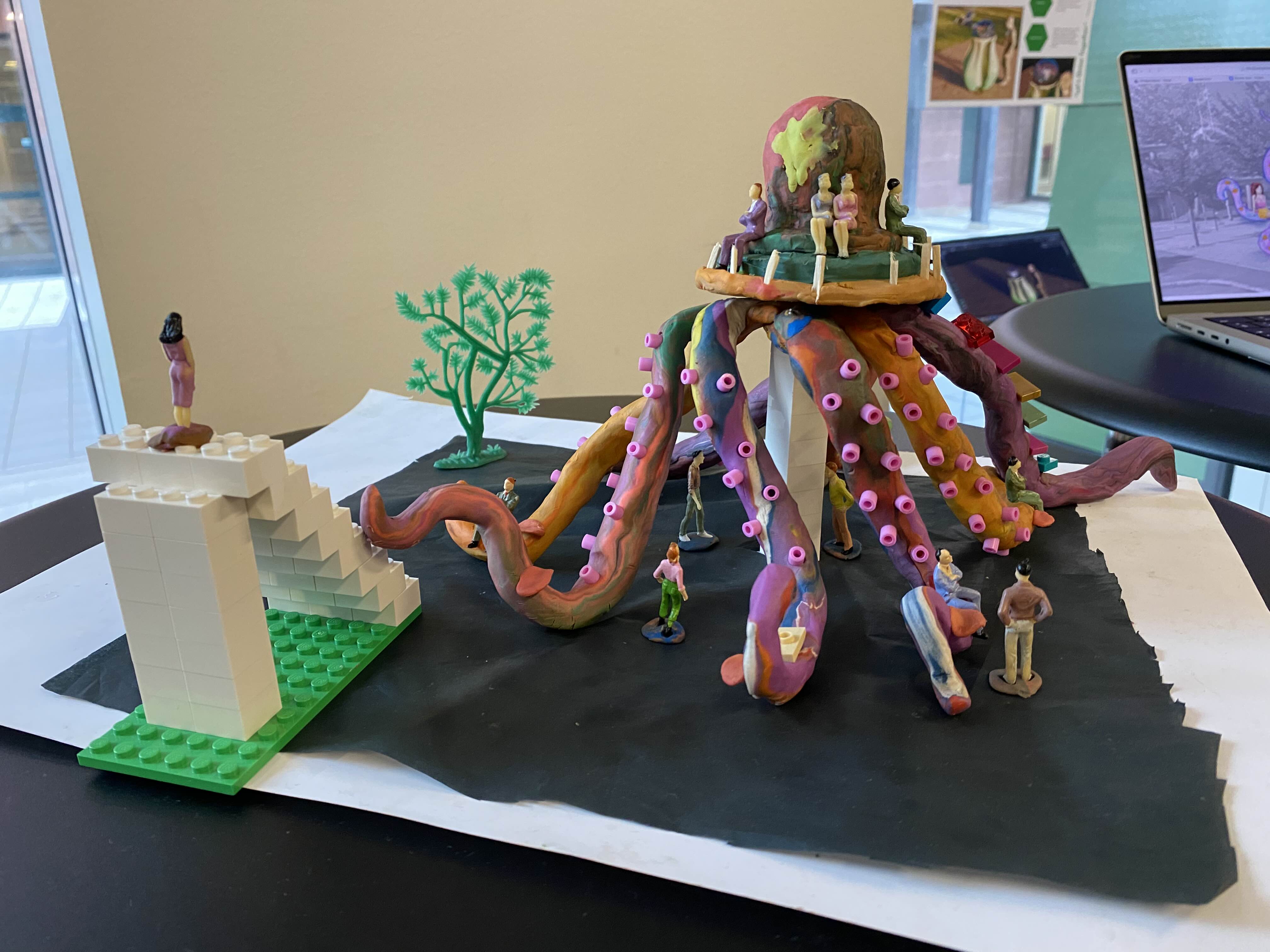
The third round added tables at the tentacle ends, a fence at the lowest level, and touch-reactive ripples — overlapping touches create colour "explosions" where they meet.
Across the three rounds of testing, scores on the semantic differential scale improved in almost every category, most clearly boring–social. Feedback stayed consistently positive about climbing and seating; safety remained a concern for some participants even after the fence and rubber flooring were added.
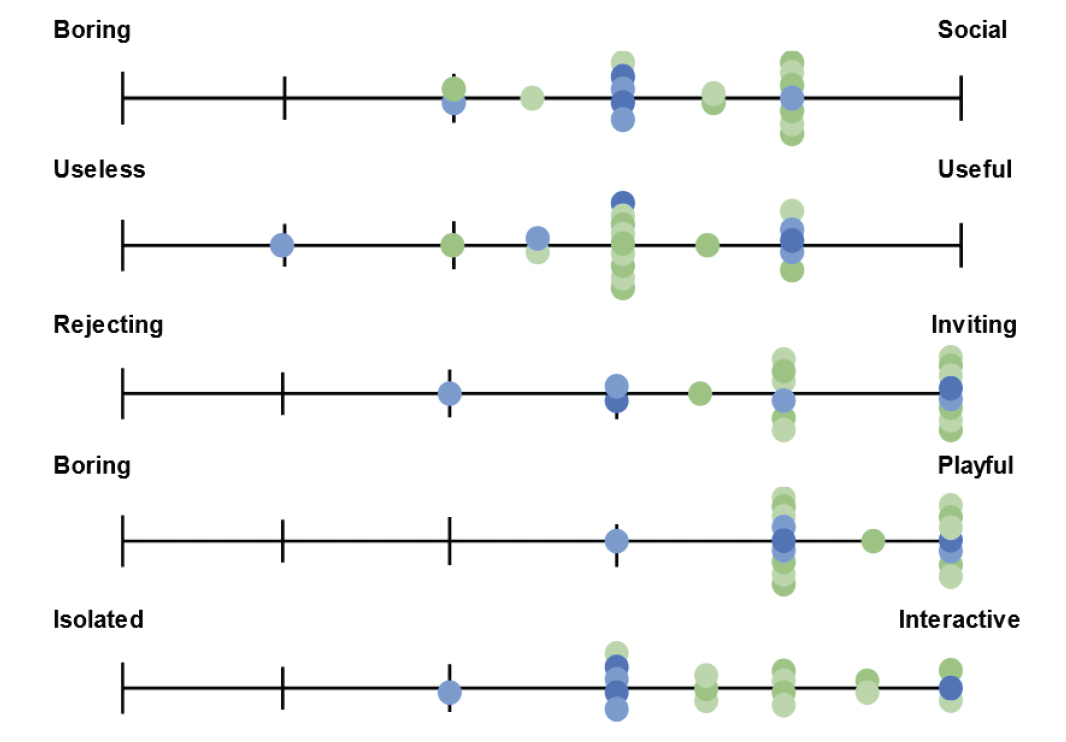
Individual responses, prototype 1 vs. prototype 2.
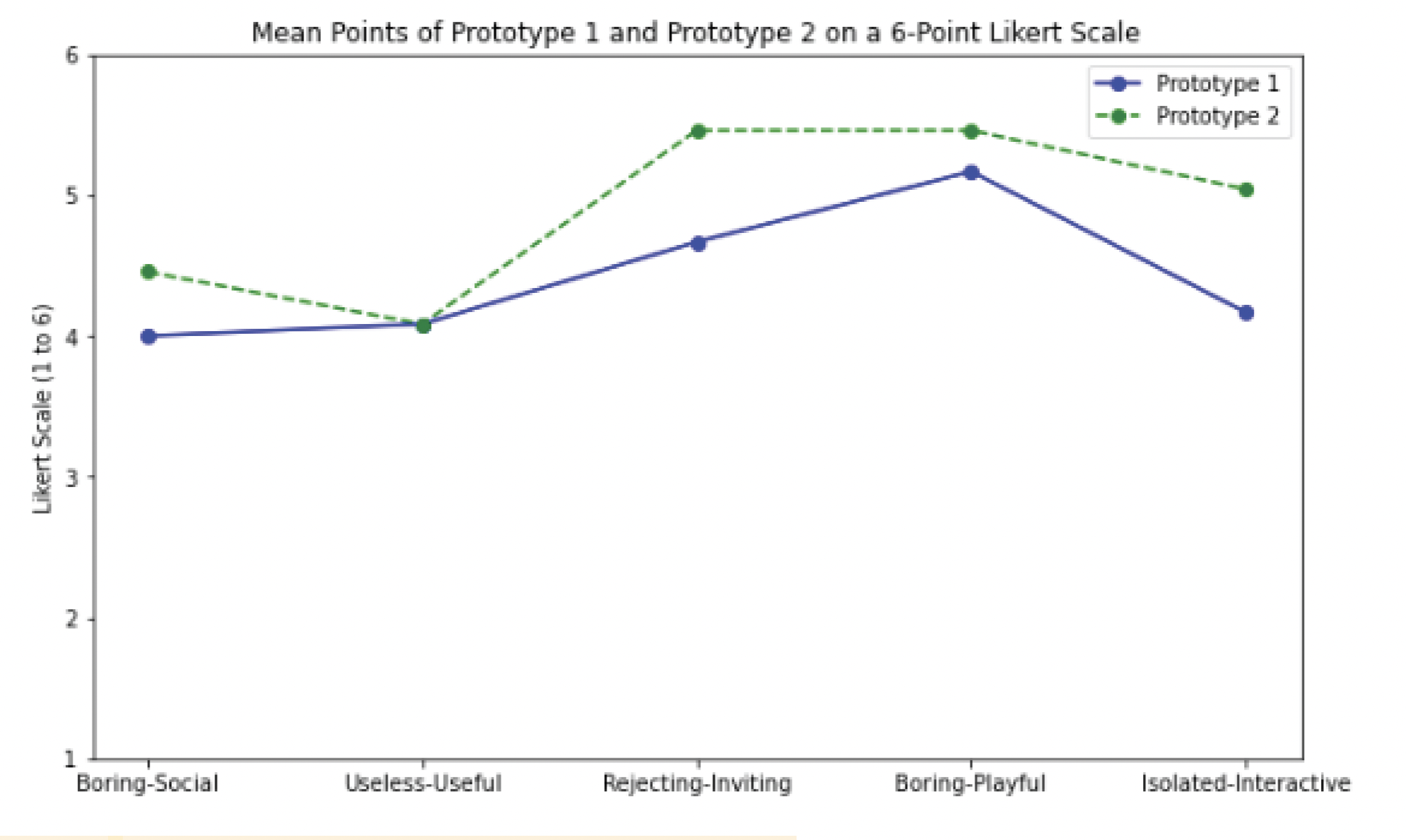
Mean scores, prototype 1 vs. prototype 2.
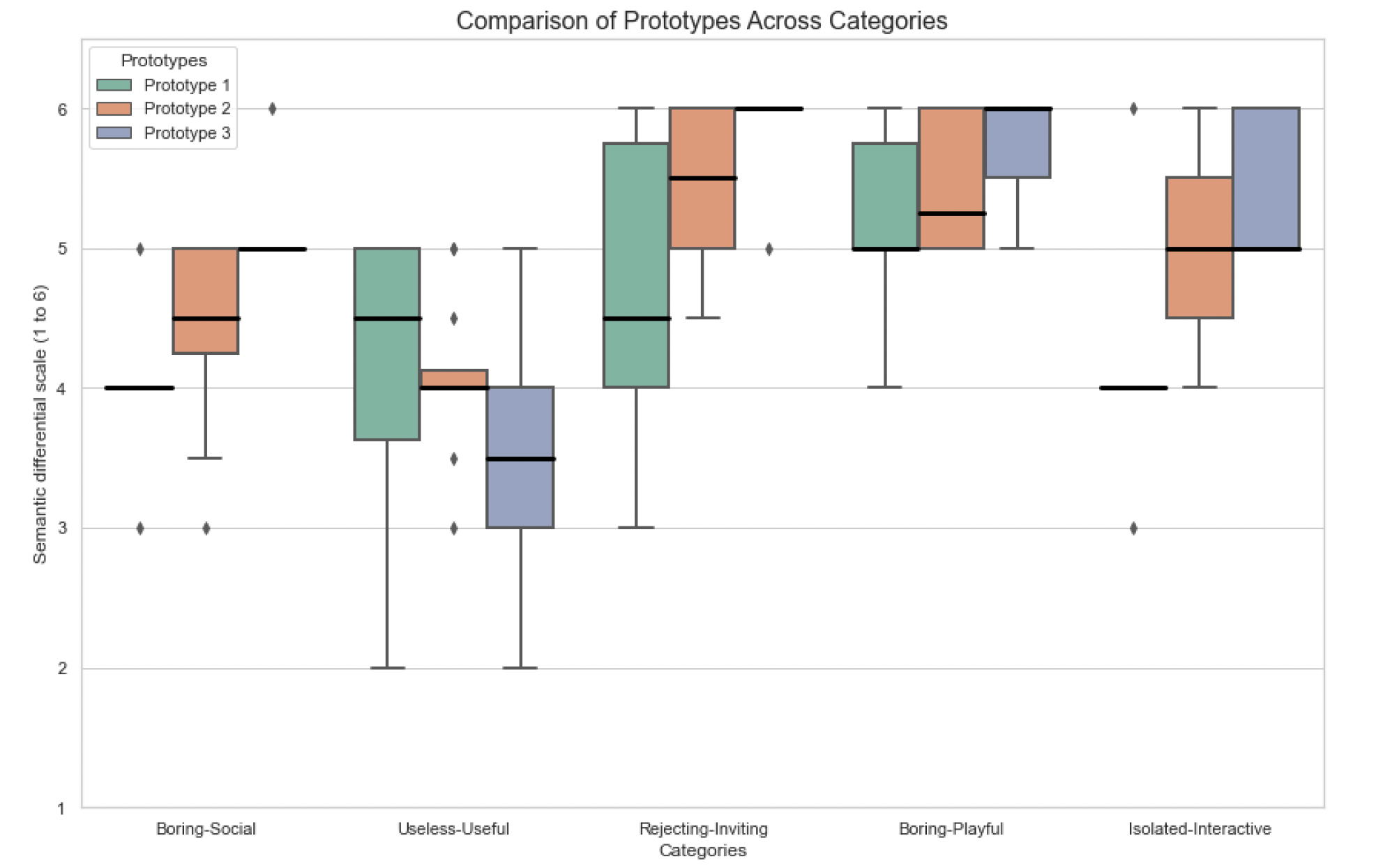
All three prototypes compared.
"The fence makes it feel safe."
"Imagine how good it would look if this really existed."
"I like it, like waves. Interacting with people through waves."
What three rounds of testing showed
Octotorg's climbing, seating and colour-changing tentacles were well received across all three rounds of testing — participants repeatedly said they wanted to climb it and sit on top. Two things stayed unresolved: people couldn't always tell that their own presence caused the colour change, and the design scored close to neutral on usefulness. Weatherproofing and a higher-fidelity, to-scale prototype were the clearest next steps.