Hello Heart
A dating app addressing loneliness with an ethical approach.


When matching puts people at risk
Tinder's platform helps people dealing with loneliness, or looking for a partner or friends. But this design also comes with ethical dilemmas.
- Many crimes have occurred through the use of dating platforms such as Tinder, including kidnapping, sexual assault and human trafficking (Pooley & Boxall, 2020), and financial exploitation (Van der Linde, 2024).
- Tinder does not protect user data — especially exact location — which makes it easy for someone to track and locate a user in real life (Pooley & Boxall, 2020).
- People can use harmful language when chatting on Tinder (Thompson, 2018).
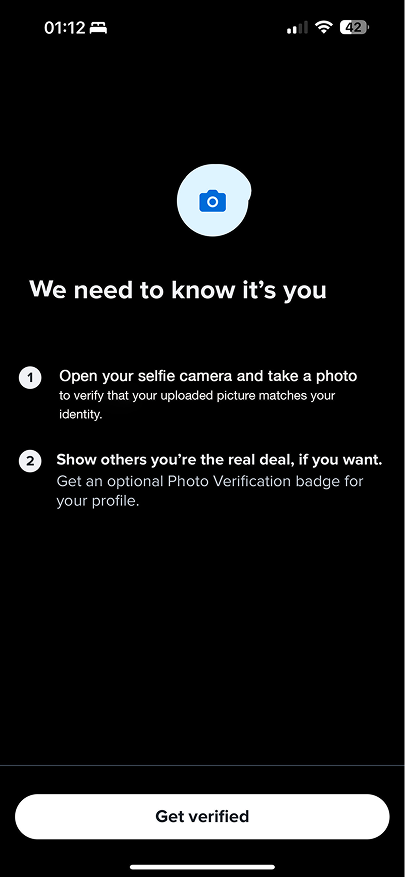
- Tinder allows users to create profiles with no verification, making it easy for scammers to fake identities (Morris, 2022).
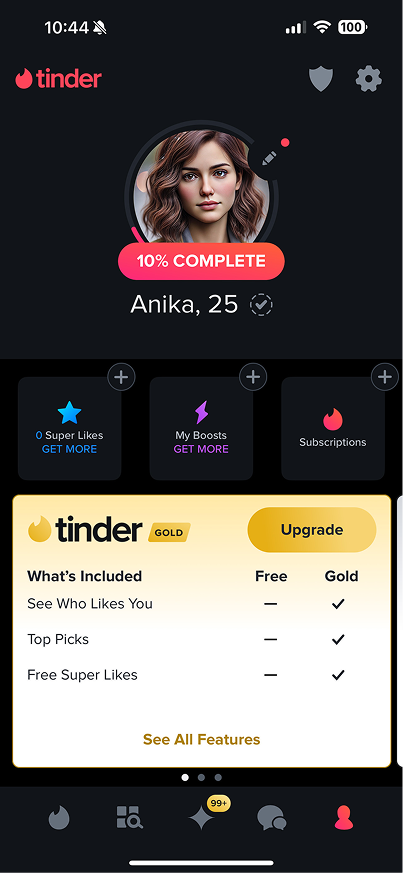
- Tinder's app seems more focused on making money from users, making the platform less affordable for everyone (PYMNTS, n.d.).
The question behind Hello Heart: how can a dating platform be designed to address these safety, privacy and fairness problems responsibly, instead of leaving them for users to deal with on their own?
A short, individual course project. The work is research and literature-based, built around ethical reflection rather than a full UX process — there was no prototyping stage or user testing.
Three ideas that shaped the analysis
Three ideas from the course literature shaped the analysis of Tinder and the direction for Hello Heart.
Design justice — affordability as an ethical issue
"Design justice impels us to consider whether a given affordance is equally available to all people." — Costanza-Chock, 2020, pp. 37–38
Tinder requires a monthly fee that is quite expensive, making the app less affordable to many users. Read through design justice, that is not just a pricing choice — it decides who gets to use a safer, better-designed platform at all.
Invisible Women — gender data gaps in design
"Before we even get to the more serious offenses like being assaulted, women are dealing on a daily basis with behaviours from men that make — and are often calculated to make — them feel uncomfortable." — Criado-Perez, 2020, p. 55
Tinder's app doesn't stop users from sending harmful messages, which mostly affect women. Criado-Perez's Chapter 1 example — a Karlskoga snow-clearing schedule built around men's commuting habits, without thinking about women's daily routines (p. 32) — shows the same pattern: designs built without gender data in mind end up putting women at a disadvantage.
Tinder shares users' exact location, a feature that can put women at higher risk of stalking or kidnapping. A 22-year-old man was accused of using Snapchat's location-sharing feature to try to kidnap a woman on the Blue Ridge Parkway in North Carolina (ABC7 Chicago, 2023) — a real case of a location feature designed without women's safety in mind.
Ethics for people who work in tech — privacy as a human right
"Protecting privacy is not only protecting our data... it is protecting a human right including various values like justice, equality, freedom and more." — Steen, 2023, p. 51
Tinder asks for photo verification only after several days, leaving a window where people can use stolen or fake photos — including a fake photo generated by ChatGPT, uploaded in a test that Tinder did not flag for verification right away.
Each problem gets a design response
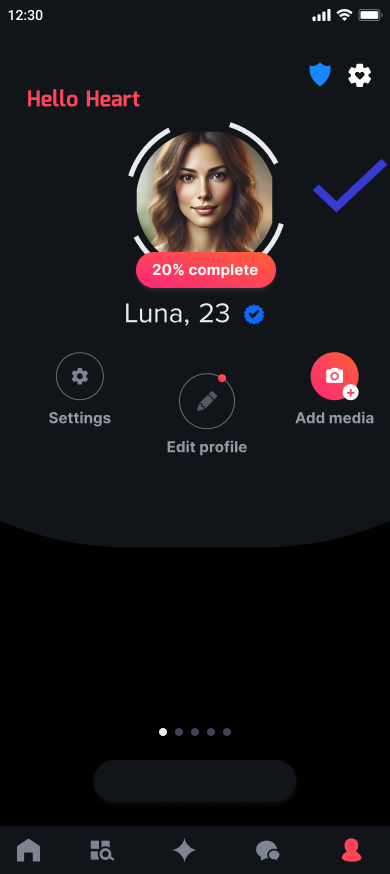
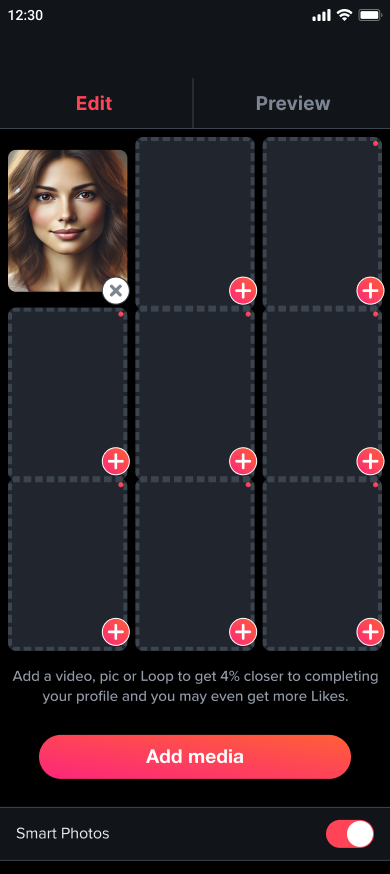
Hello Heart is a concept redesign of Tinder — each design response answers one of the ethical problems identified above. Before/after pairs below compare Tinder's real interface with the Hello Heart concept.
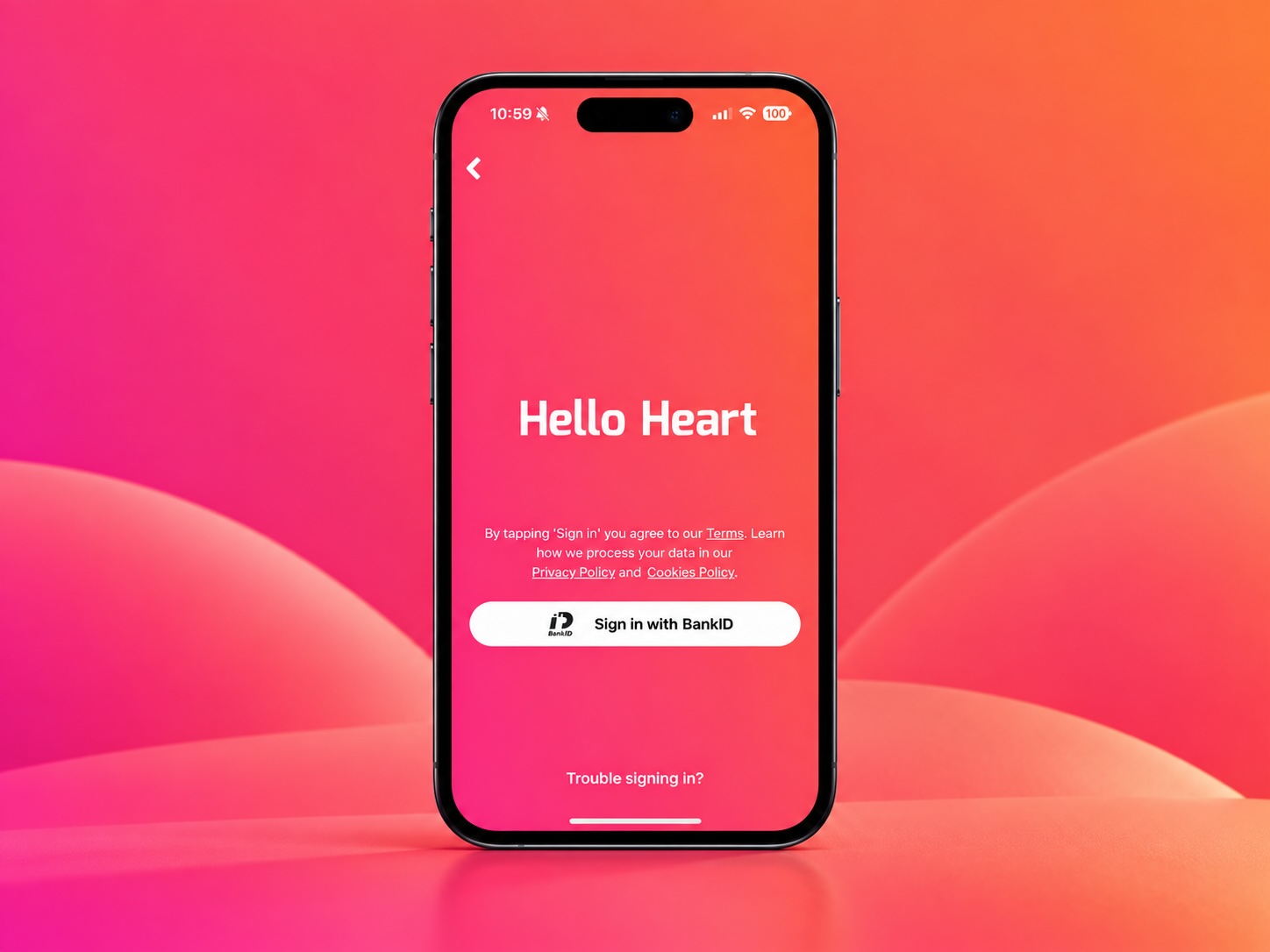
Verify users with BankID
Signing in with BankID ensures every user has a verified identity, discouraging fake accounts and scams, and letting law enforcement identify a profile's owner when a crime is investigated (Husz, 2018).
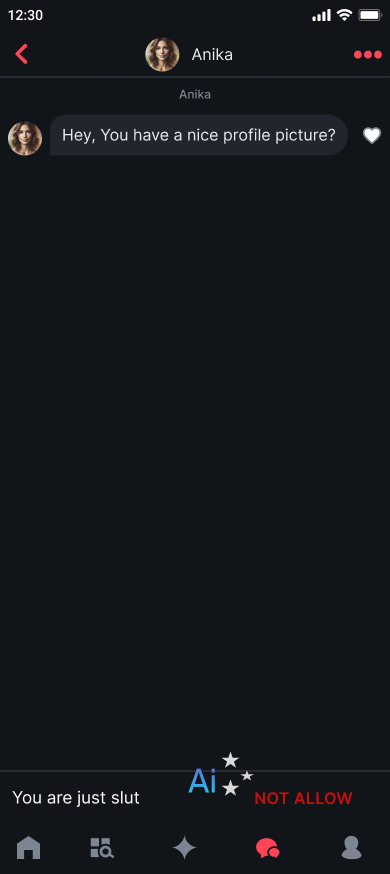
Stop harmful messages
AI automatically detects and blocks harmful language before it's sent. The sender is blocked right away, and the recipient is notified that a message was blocked for using inappropriate language.

Fair, ethical pricing
A more affordable price than Tinder's, so a safer platform isn't only available to people who can pay a high monthly fee — in line with design justice.
Protect location privacy
Rethinking how exact location is shared, so the feature can't be used the way Tinder's has been, to track or locate a person in real life.
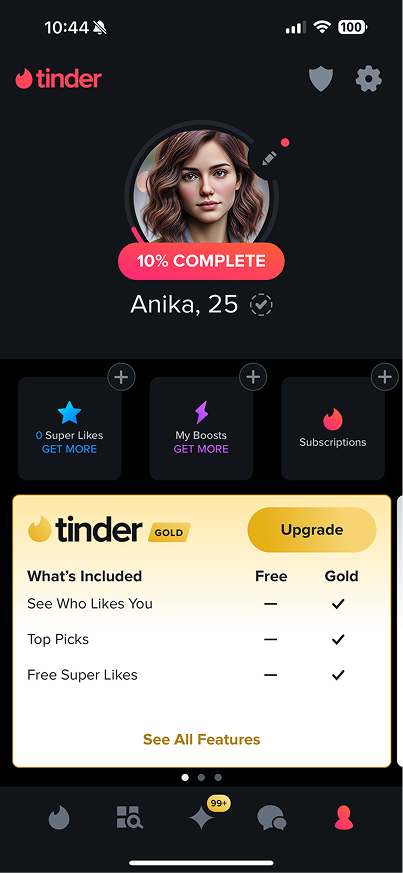
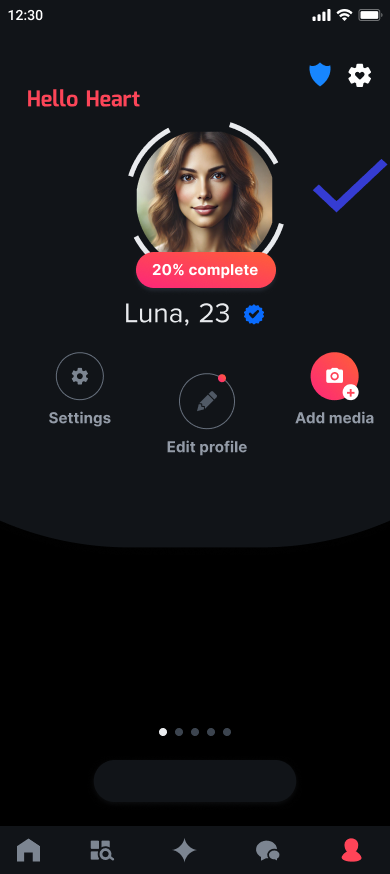
Verified photos
Users must verify their photos through a secure AI service before sharing them on the platform, protecting people's photos from being stolen and reused elsewhere.
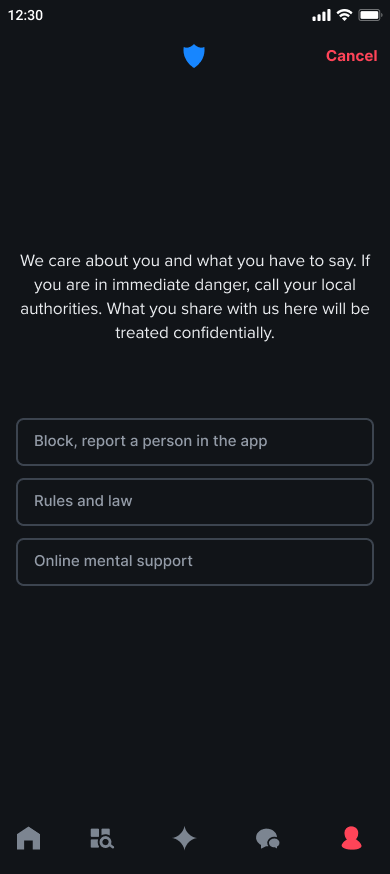
Safety & support
A safety section with three options: block or report a person, read about rules and rights, or contact mental health support.
What remains unsolved
Even with these changes, some problems remain open. Users can still take a screenshot of a profile photo and use a reverse image search to find information about that person — a limitation this concept doesn't solve.
"As long as you do not know exactly which data are being collected, by whom, to whom they are sold, and for what purposes they are used, you do in fact have something to hide." — Steen, 2023, p. 52
Stardust et al. (2022) note that dating apps are under growing pressure from civil society, media and governments to address safety concerns — which has led to more safety features, but also raises a separate concern: some of those features add more surveillance, not less. That tension is left open here, and would need further study to design around properly.
Hello Heart is a concept, not a built or tested product. The outcome of this project is the analysis itself: applying design justice, gender data gaps and privacy-as-a-human-right to an existing platform, and using that analysis to shape a more responsible alternative.