Gilded
Cage
A short game about a fairy trapped inside a glass terrarium. It looks calm and cosy on the surface. Underneath, it's a lot darker.
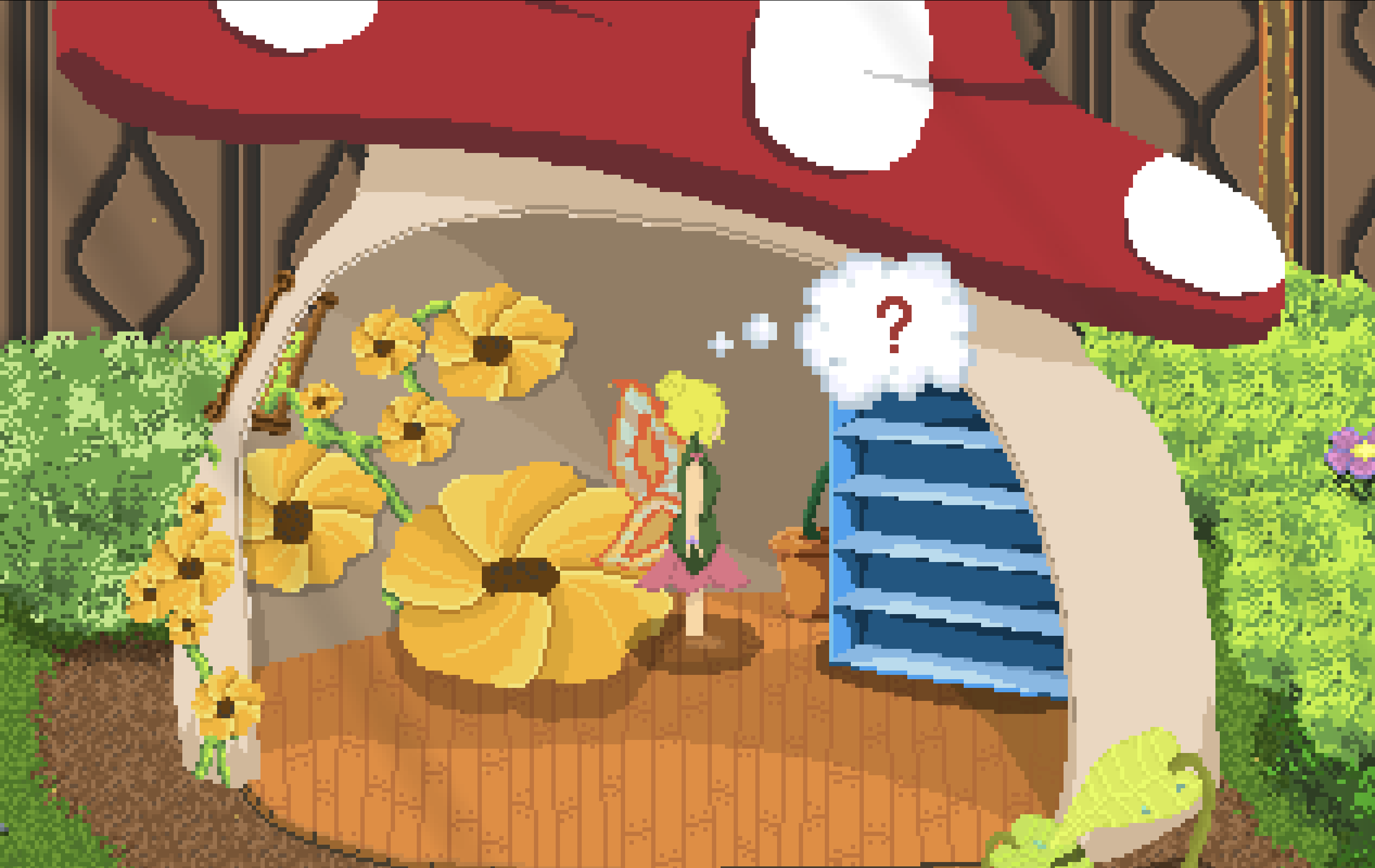
Cosy on top, dystopian underneath
Gilded Cage mixes two genres: cosy games, which are calm and relaxing, and dystopian games, which hide something darker. We wanted a game that feels comforting at first, then slowly reveals it isn't what it looked like.
The fairy lives inside a glass terrarium — the Cage. Everything inside is green and cosy. But she's trapped, and has lost hope of getting out. We looked at games like Stardew Valley for the cosy farming feel, and Blackwell Fishing for a short loop with a dark side you can easily miss if you're not paying attention.
Water the flowers, live the day, repeat
Each day the fairy waters a flower, eats a fruit from it, then rests on a bench. Small and repeatable — until she finds the one flower that's different. Watering and eating from that one ends the game, and shows what the cosy loop was really hiding.
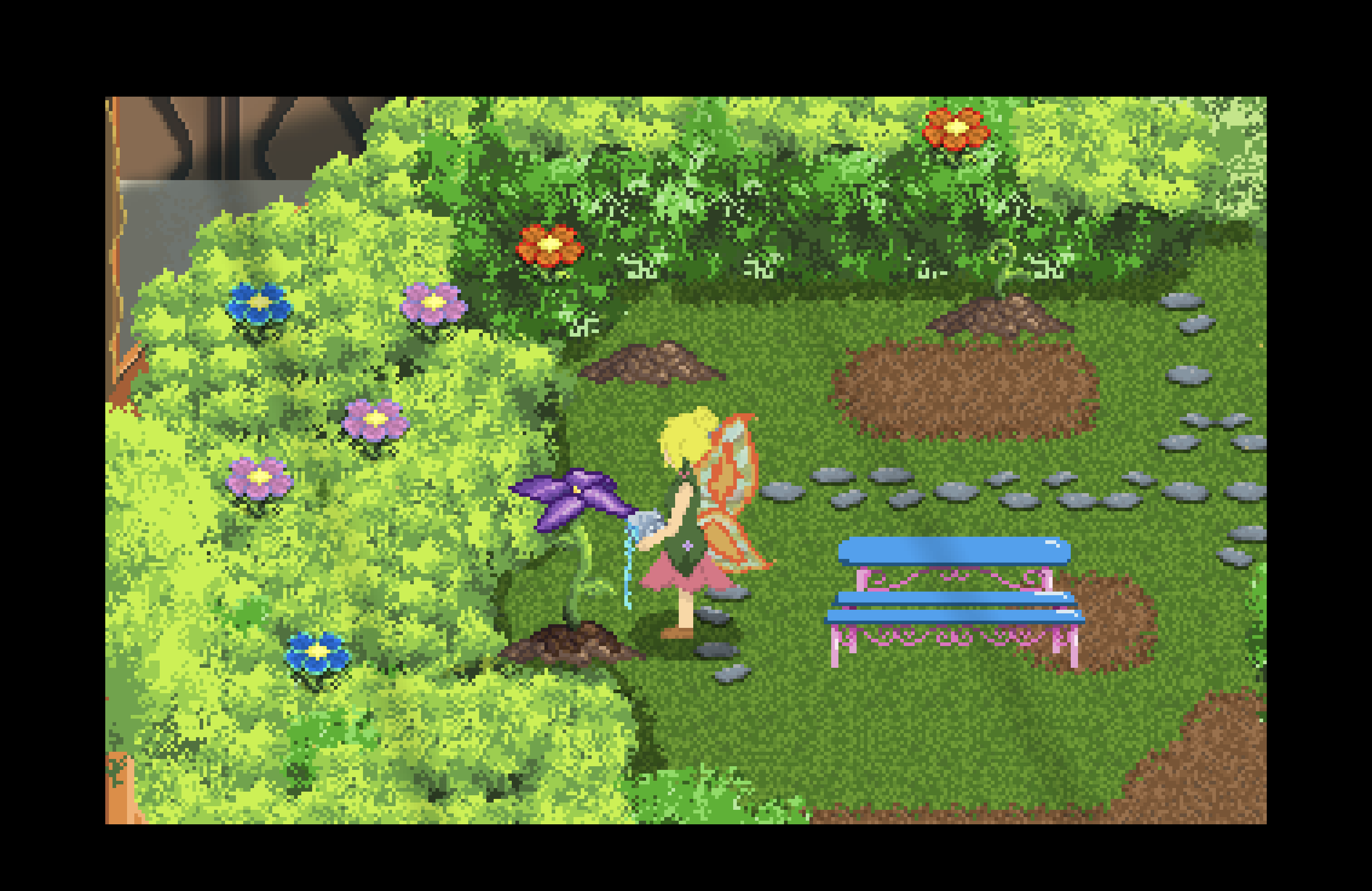
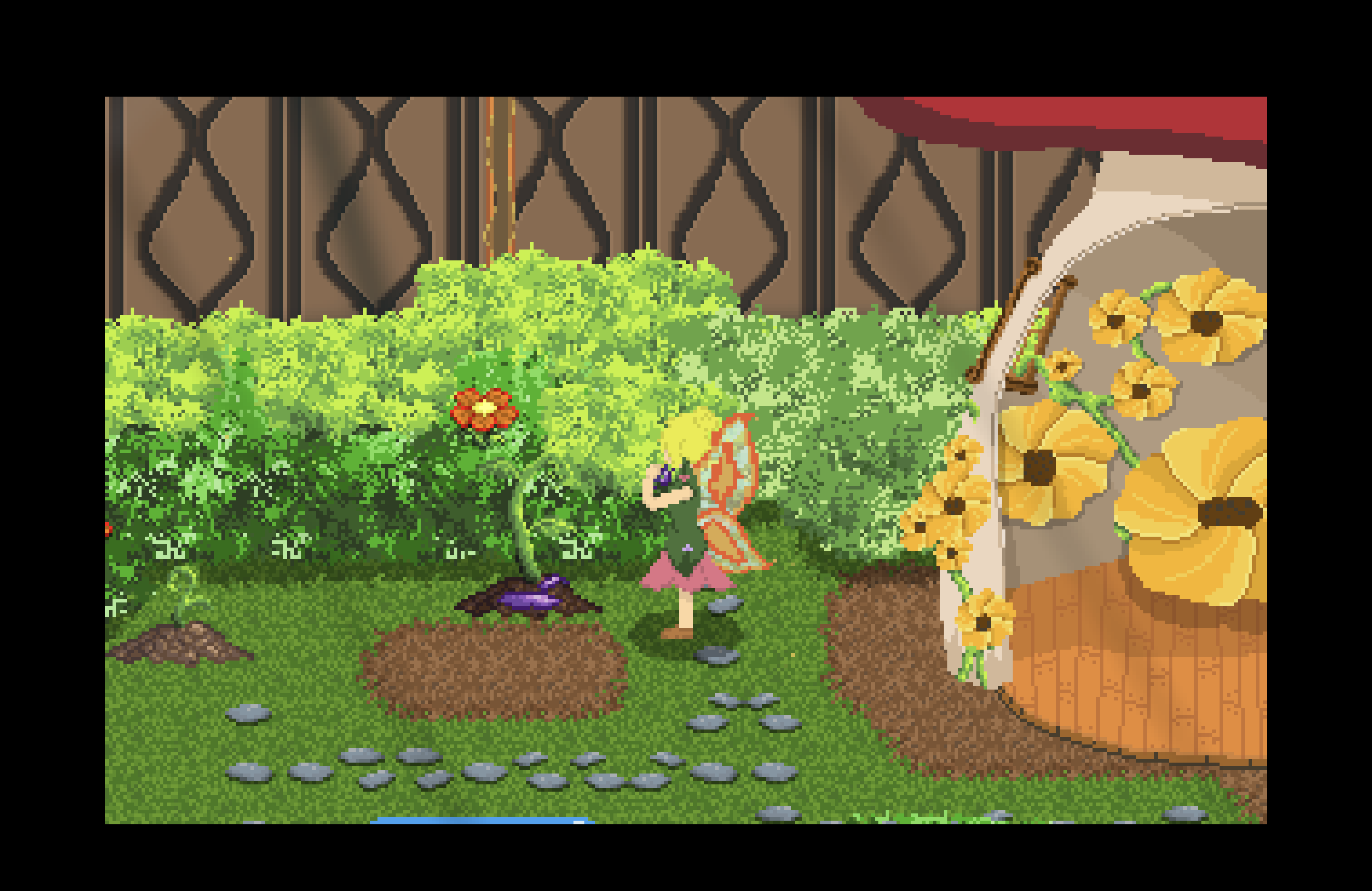
A first look at the game
Short clip for now — full gameplay video coming during coding.
Illustration and visual design
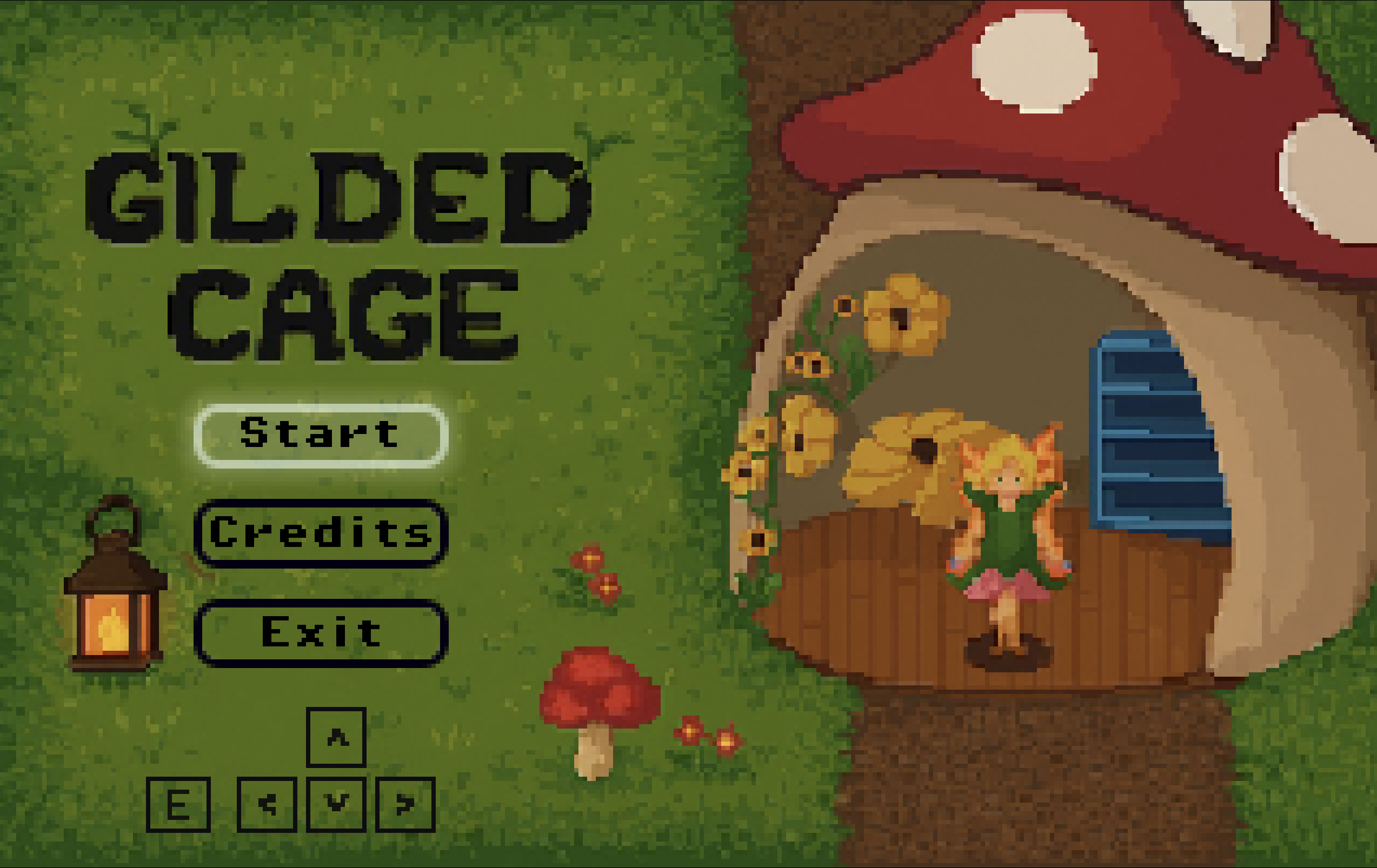
I was part of the design process from the start, and my main focus was illustration. I drew the game's visuals — the environment, the cage, the flowers and grass — and put them into Godot myself, adjusting things like grass colours directly in the engine. I also designed the home screen. Along the way I learned the basics of Godot, even though coding wasn't my main role.


Ground tiles I drew and tuned by hand — small details, but they set the whole cosy feel.
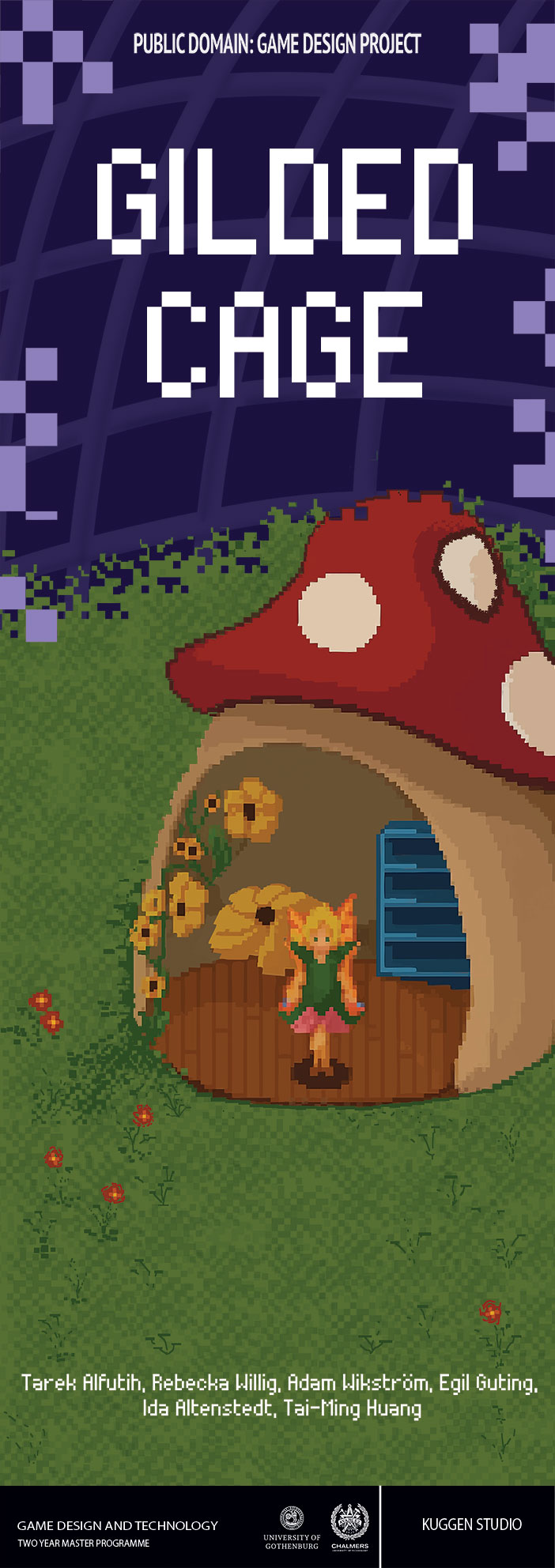
Designed for the game exhibition
I drew and designed this poster for the course's game exhibition, where Gilded Cage was shown to the public.
Two playtests, then an exhibition
We tested the game twice during development, then again in front of the public at a game exhibition. Some of what we learned:
Many players missed the secret ending entirely, or thought the fairy just fell asleep instead of dying.
A crossed-out water droplet icon confused players — they thought they needed to refill the watering can instead of finding more flowers.
The fade to black at the ending happened too fast, so players didn't get time to understand what was going on.
Players liked the exploration, the graphics, and the music — and the ones who understood the story liked it too.
The game and its report
Gilded Cage is a finished, playable game.
From static images to a game engine
Gilded Cage was my first time putting illustration directly into a game engine, not just handing off static images. Learning the basics of Godot helped me understand how visual design actually meets code, and what's realistic to ask for as a designer working with a small team.
Watching people play at the exhibition also showed me how much a single icon or a few seconds of pacing can change whether players understand your story at all.